Iran: A Labyrinth Swept Up by History
9/22/2026#伊朗#中东历史#地缘政治#国际时政
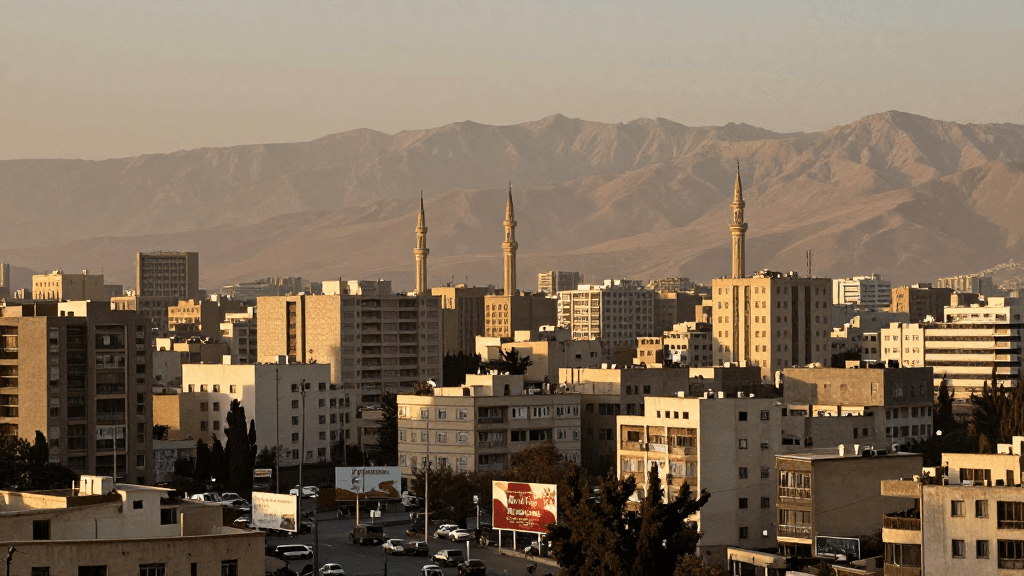
Everyone, what exactly is Iran? Simple: it’s the country sandwiched between Iraq, Turkey, Armenia, Azerbaijan, Turkmenistan, Afghanistan, and Pakistan, bordered by the Caspian Sea to the north, the Persian Gulf to the south, with an area of 1.65 million square kilometers—equivalent to Xinjiang—a population of 92 million, slightly less than Henan’s, and a GDP that exceeds Henan’s when calculated at purchasing power parity and is higher than Portugal’s at nominal exchange rates. But no matter how you calculate it, its per capita GDP is higher than India’s.
This is merely the material Iran—not the eternal Iran that resides in the hearts of its people. The search for eternal identity is the challenge facing nations that have been “swimming naked”—as seen in the cases of Trump in the U.S., Putin in Russia, and Marx after his encounter with Confucius. Thus, Trump answered the question of what America is, and Putin answered the question of what Russia is. When Marx met Confucius, well, he ended up on the wrong channel.
To understand the eternal Iran, one must return to the very beginning: the collision of the Arabian and Eurasian tectonic plates shaped Iran’s geographical reality. The Zagros Mountains stretch from Turkey to the Persian Gulf; the Alborz Mountains connect to the Caucasus Mountains, running eastward along the southern shore of the Caspian Sea to merge with the Khorasan region; and the Eastern Iranian Mountains link to the Suleiman Mountains of Afghanistan and Pakistan. The mountains are Iran’s chisel, its ribs, and its breasts.
The mountains create an intricate tapestry of the Iranian Plateau, ancient lands, oases, salt flats, and a few low-lying plains. They protect the heart of Persia and sustain the majority of Iran’s population. The mountains have fostered a diverse economy, yet have long posed transportation challenges, limiting internal trade; they have concealed natural treasures that were not mined until the advent of modern industry.
Unlike other ancient civilizations, Iran lacks a major river running through its entire territory; the only non-core agricultural region lies west of the Zagros Mountains, where the ancient Elamite civilization flourished. The Elamite language is an isolating language, but the Elamites do not belong to the Iranian ethnic group. The Iranian people trace their origins to the Proto-Indo-Europeans; their descendants, the Aryans, arrived on the Iranian Plateau around 1000 BCE and became the Iranians. Iran is synonymous with the Aryans: I-R-A-N, A-R-A-N, A-R-Y-A-N—a circular argument. So what is “Persia”? The Aryans who ascended the plateau were divided into three branches: the Medes, the Persians, and the Parthians. The Pars people, a Persian tribe, settled in the southern Zagros Mountains—today’s Fars Province in Iran—which is also the birthplace of the Persian Empire.
Facing the mountains, the Persians invented the qanat—a system of wells dug into the mountainside, connected by underground channels to the foothills—to transport groundwater over long distances. This boosted agricultural efficiency, supported the non-agricultural population, led to the emergence of cities and a complex division of labor, and transformed the tribe into a nation-state. By the end of the Spring and Autumn Period, the Achaemenid Dynasty—the First Persian Empire—was at the height of its power, with a territory three times the size of modern-day Iran, becoming the world’s first empire. The empire consisted of both the suzerain state and its conquered territories; power was decentralized, with local autonomy and multiple centers of authority, resembling a loose federation.
The empire respected local customs, embraced various religions, and liberated the Jewish people; Cyrus the Great became the only non-Jewish Messiah in Judaism. However, when this pluralistic structure was weak, the centripetal force at the periphery was insufficient, making it difficult to maintain cohesion. As a result, today’s Iran consists of a Persian majority that accounts for just over half of the population, with a quarter being Azerbaijanis, and dozens of other ethnic groups, including Kurds, Arabs, Turkmen, and Baloch.
Israel and American neoconservatives have made regime change in Iran a strategic goal, seeking to sow discord among ethnic minorities, as many of Iran’s strategic locations are situated in areas where ethnic minorities reside. The main oil and natural gas production areas and export ports are all located in Khuzestan Province, where more than half the population consists of Arabs who year for autonomy, while the Chabahar Port—a joint venture between Russia, Iran, and India—is located in Baluchistan Province. Although Iran’s opposition consists of Persians, Persian nationalism is unwilling to relinquish its border regions; in the face of a major enemy, the nation can unite, but in the absence of such a threat, it may fracture. Iran’s unique power structure may, following a major upheaval in Khamenei’s government, fragment into hostile factions, leading to a “Balkanization” of Iran.
Splitting Iran to create chaos offers limited benefits to the United States, but it alleviates geopolitical pressure on Israel’s expansion. Judaism reveres the Persian monarchs as prophets; after Israel’s founding in 1948, Iran was the second Muslim country to recognize it, and the two nations engaged in an “oil-for-arms” exchange until their relations broke down in 1979. When it comes to the Iranian issue, Britain calls the shots. In the 19th century, Britain and Russia vied for colonial expansion in Central Asia: Tsarist Russia occupied Persia and controlled the Caucasus, while Britain intervened in southern Persia, establishing a division of spheres of influence with Tsarist Russia.
The Anglo-Persian Oil Company extracted Iranian oil, and Britain prioritized economic penetration, even bribing the Qajar kings to secure oil extraction rights. Before World War II, the Anglo-Persian Oil Company was the British Empire’s leading enterprise. In 1941, the Soviet Union invaded Iran, turning it into a corridor through which the West supplied materials to the Soviet Union. Britain and the United States propped up the Pahlavi dynasty, but its regime was fragile; due to British and American interference, Iran called for the nationalization of oil companies. In 1951, Iran nationalized the Anglo-Iranian Oil Company. Two years later, a joint British-American operation overthrew the government, bringing down the Mossadegh administration. Pahlavi became a dictatorial monarch who pursued a pro-American policy and, following the U.S., aligned with Israel—a situation the Iranian Islamic clergy could not tolerate.
By the late 1970s, the Iranian working class and Muslim masses overthrew the Pahlavi dynasty. Anger sparked by a fire at a movie theater, coupled with the king’s attempts to shift the blame onto others, ultimately led 5 million people to take to the streets.