Geopolitical Rivalry: DeepSeek's Rise in Africa
9/13/2026#DeepSeek#人工智能#非洲市场#中美AI#开源大模型
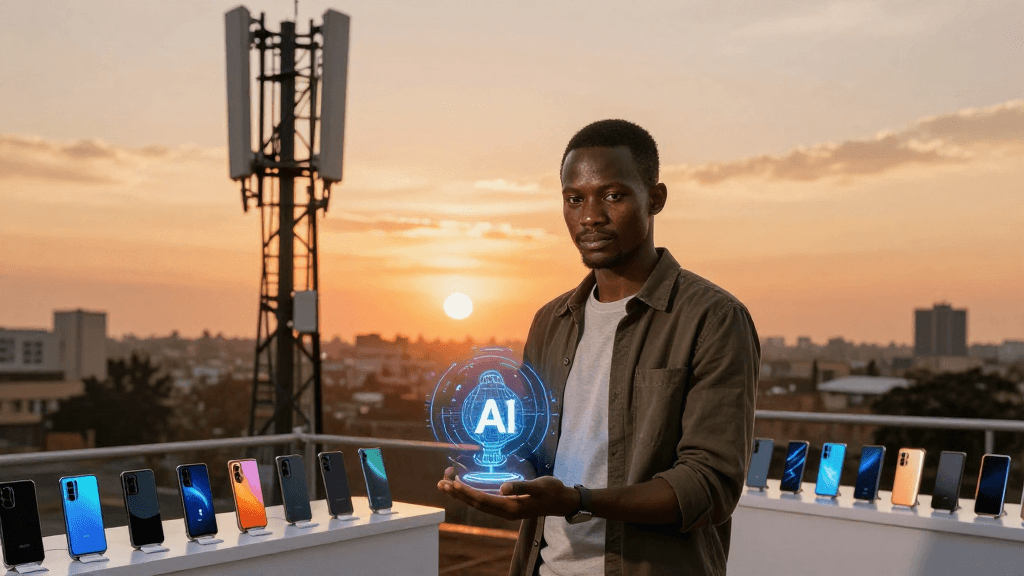
Everyone, today I’d like to talk about an article I recently came across in the foreign press about the aggressive expansion of China’s AI giant DeepSeek in Africa. Don’t be fooled by Africa’s economic size—it’s only worth $180 billion—but the continent has a population of 1.5 billion, and that’s set to grow by another 1 billion by 2050. Although the digital economy accounts for just 5.2% of the total, it’s a huge opportunity—data is the oil of the new era. So, the battle for Africa has long since begun.
Curious to know why DeepSeek has managed to gain a foothold in Africa? Is its technology that impressive? Don’t be naive—technology is just a supporting act. The real game-changer is the open-source model. The big tech companies in Silicon Valley—like GPT-4—use a proprietary model, much like their own black boxes: you pay to use them. DeepSeek and Alibaba, on the other hand, have taken the open-source route, sharing model code and algorithms across the web—you can modify them however you like. They make their money from the supporting infrastructure and cloud services.
In terms of cost, the difference is huge. To process 1 million query tokens, GPT-4O charges $5, while DeepSeek charges just $0.27. To generate 1 million tokens, GPT-4O costs $15, whereas DeepSeek costs only $1.10—a tenfold difference in price. There’s a company in Africa called Equalize AI. The monthly cost of training a small model using DeepSeek is just $2,700, whereas using GPT-4O costs $12,500—a staggering difference.
Take, for example, a Kenyan computer scientist named Sikko, who founded Kala. He tested every AI model on the market and concluded that while they were all quite good, none were affordable—until DeepSeek came along. He immediately integrated DeepSeek into the core of his chatbot product for one simple reason: it’s cheap.
DeepSeek also has a natural advantage in Africa: localization. Western models are trained on Western data and have a Western perspective—they can’t even distinguish between African men and women. Africa has over 2,000 languages and dialects, and processing these languages is inefficient and computationally expensive. Therefore, DeepSeek can be tailored to local needs, reducing development costs and improving usability.
On the hardware front, Transsion Holdings commands half of the African smartphone market, while Huawei and ZTE provide most of the data center and 5G fiber-optic network equipment. In 2020, 70% of Africa’s 4G networks were built by Huawei. This is equivalent to Africa already having a Chinese information superhighway, allowing Chinese AI models to run seamlessly.
However, there are risks. First, geopolitical conflicts could lead to supply disruptions. With intense technological competition between China and the U.S., neither side wants the other’s supply chain to be easily severed. African entrepreneurs fear most that “when giants clash, it’s the little guys who suffer.” Second, overreliance on Chinese infrastructure poses risks. For example, during this year’s college entrance exams in China, major domestic AI companies shut down their image recognition and real-time Q&A functions for three days, leaving various AI tools and chatbots in Africa unable to provide services for that period.
This requires Chinese companies expanding overseas to properly manage these risks. Overall, DeepSeek’s success in Africa hinges on cost, models, and the ecosystem. Meanwhile, Silicon Valley giants are still daydreaming about the future of AGI in their PowerPoint presentations, yet they’ve built their business models around outdated, direct-operated multinational chains. It’s like a certain Starbucks-style chain selling overpriced American-style coffee in Africa—extremely expensive and offering poor value for money. DeepSeek, on the other hand, operates like a franchise model: it provides you with the core framework, and you develop solutions tailored to local needs, training the most suitable models using local data—it’s both affordable and user-friendly.
Folks, that’s what we’re discussing today. I hope you’ll follow and recommend this little star so you don’t miss the next episode. See you next time! Bye-bye.