The EU's Double-Edged Sword: Is a Trade War Between China and the EU Imminent?
9/13/2026#中欧关系#贸易战#产能过剩#反胁迫工具#欧盟
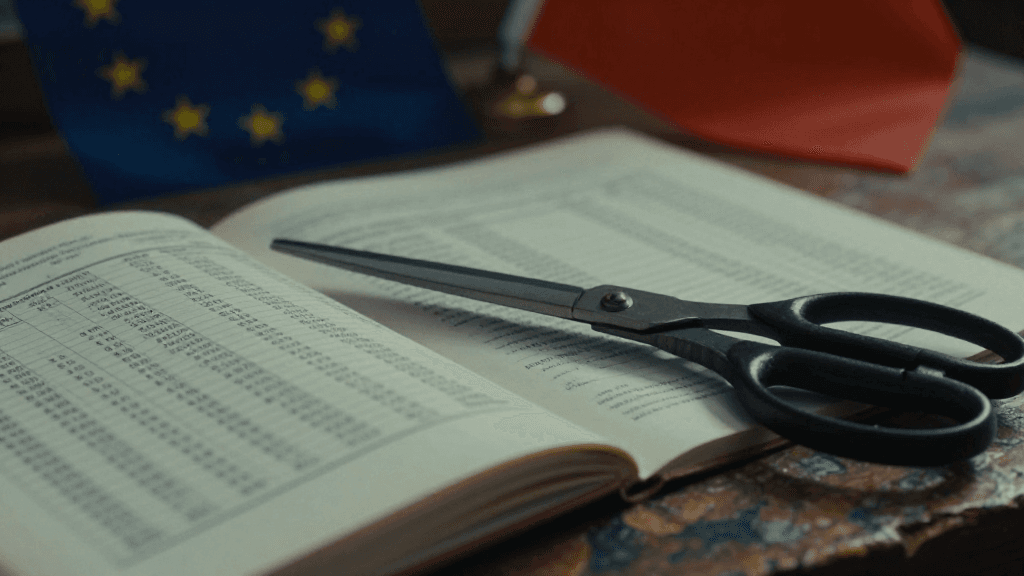
Ladies and gentlemen, recent news reports all seem to point to one major development—a trade war between China and the EU appears inevitable. The EU-China Relations Forum held in early May was intended to serve as a bridge for communication between the two sides, but instead, sparks flew as each side accused the other of protectionism. In late May, the European Commission began discussing “China Shock 2.0,” attributing the massive trade imbalance between China and the EU to overcapacity resulting from Chinese subsidies. They asserted that this trade relationship is unsustainable and that the EU must take a tougher stance. Germany and France have subsequently declared their intent to go head-to-head with China. Now, the EU is preparing to model its approach after the U.S. Section 301, creating a set of economic and trade tools specifically targeting China. For example, the “overcapacity instrument” would restrict Chinese companies’ exports to the European market once their production is deemed to be in excess. There is also the “anti-coercion instrument”: if a country uses economic and trade relations to negotiate policy conditions, that constitutes coercion and triggers EU countermeasures. Furthermore, the EU even plans to further tighten cybersecurity regulations to restrict Chinese companies from providing digital infrastructure.
Let’s look at the data. Since 2020, the EU’s trade surplus has expanded significantly, rising from over 100 billion euros in 2020 to 360 billion euros. In the first quarter of this year, the surplus reached 98 billion euros, and for the full year, it is likely to approach 398 billion euros—exceeding even that of the United States. Sessourne predicts that this figure will reach 500 billion euros next year. So, is this trade surplus a serious problem? Forman, an economist who served under President Obama, argues that goods sold at rock-bottom prices effectively amount to an indirect wage increase and also drive down the cost of industrial intermediate goods. However, this logic does not apply well to Europe, as its economy relies heavily on traditional manufacturing sectors that are in direct competition with China.
The EU naturally argues that this competition is unfair, citing an OECD report that states subsidies to Chinese enterprises account for 2.5% of their annual revenue—three to eight times that of Western firms. The report specifically mentions key industries such as photovoltaics, shipbuilding, steel, and aluminum. From 2005 to 2024, China’s share of global revenue rose from 14% to 87% in photovoltaics, from 34% to 50% in shipbuilding, from 22% to 49% in steel, and in aluminum, from 8% to 40%. Although the OECD states that subsidies have not boosted productivity or profit margins, they have objectively enabled Chinese companies to outcompete Western rivals in global markets. This touches on the definition of fairness: when the Chinese manufacture shirts and basins, trade is complementary and perfectly fair; but when they produce cars and airplanes, the balance is disrupted.
China’s general stance on this is to deny the allegations, arguing that subsidies are normal because the world is shifting toward industrial policy, and governments are increasingly intervening in the economy. The EU, meanwhile, hopes China will acknowledge that its policies are no different from those the EU has pursued for decades—it is simply a different way of competing. But China clearly isn’t buying it, viewing the EU as a puppet of the United States, merely carrying out the task of suppressing China. Now, China is prepared to respond. The “Regulations on the Security of Industrial Chains and Supply Chains,” announced in April, have officially taken effect. Like the U.S., the EU is highly dependent on critical minerals and raw materials. If China were to cut off supplies of rare earths and other critical materials for a year, the global economy would suffer losses of 4.4 trillion euros, with Germany bearing the brunt of the impact as many of its production lines would grind to a halt. Consequently, the EU has already begun stockpiling 34 types of critical materials to address potential shortages.
Behind the EU’s tough stance lie two decades of strategic missteps and inertia in the digital economy, artificial intelligence, and the energy transition. European companies have enjoyed high profits from traditional industries but have been slow to respond in research and development; now, however, they must compete with China. The EU’s “fairness” card is nothing more than a political stunt, but it is unlikely to convince China. Former European Central Bank President Mario Draghi warned that if the EU cannot match the economic competitiveness of China and the U.S., it will slowly decline and ultimately lose its reason for existence. Now, the EU finds itself in an awkward position: it had originally planned to coordinate with Biden to counter China, but when Trump took office and refused to treat Europe as an ally, Europe had no choice but to ease tensions with China. Now that Trump has stopped stirring up trouble, Europe feels it must stand on its own two feet. It has learned a lesson from the U.S.-China trade war: only by closing its markets to Chinese goods can it exert pressure, and only by escalating tensions can it minimize its losses.
Ladies and gentlemen, a trade war between China and the EU is on the verge of breaking out. The EU’s blade is already at our throats, and we need to be prepared.