European Companies Collectively "Relocate": The Allure of Chinese Manufacturing
11/4/2026#欧洲企业#产业转移#中国制造#中欧经贸
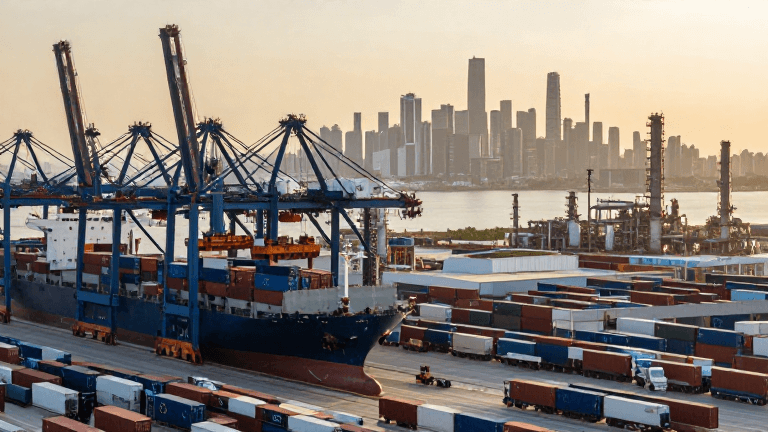
Everyone, the day before yesterday we talked about the high energy prices in Europe, companies going bankrupt one after another—so where did they go? Take a guess? Our EU Chamber of Commerce did a survey this year—what were the results? A quarter of member companies are shifting production to China, while those moving to other places combined total one-eighth. European politicians keep talking about de-risking, but the reality is that European companies, like companies elsewhere, are becoming more dependent on China.
The fastest movers are naturally the big energy consumers and pharmaceuticals—80% are shifting to China, like Swiss pharma companies Roche and AstraZeneca; then chemical engineering firms, such as France's Schneider Electric, Denmark's Danfoss, and wind turbine maker Vestas. The Huizhou Daya Bay Petrochemical Industrial Zone welcomed chemical giants BASF and Shell last year, and last month Switzerland's Clariant also moved in. Within five years, it is expected that more than half of the world's chemicals—the foundation of modern industry—will be produced in China.
European automakers are the same. They are laying off heavily at home but investing heavily in China to build electric vehicles. German auto supplier ZF has built a new plant in Shenyang while cutting 7,600 jobs in Europe; auto parts manufacturer Schaeffler is the same—its China business will double within six or seven years, but it will cut 4,700 jobs in Europe. Why are European companies flocking to China? Simple: on the corporate side, the first consideration is low labor costs. Clariant's boss said a position that costs 100,000 euros in Germany costs only 80,000 RMB in China. But more important is supply chain efficiency, so high that European manufacturing finds it hard to compete. Things that already exist in the Chinese market now can't be sold in Europe even if brought in.
So why do European companies choose China? First, low labor costs—that's genuinely attractive. More important is policy orientation. Chinese official procurement requires domestic products first; foreign companies look at this and raise their hands to say, then if I open a factory in China it can count as local too. You have to consider it. In the macro environment, China's PPI has been in continuous negative growth for three years, the RMB has depreciated 20% against the euro, and the Ukraine war and aggressive energy strategy have caused European manufacturing costs to soar. So made-in-China is really far more cost-effective than made-in-Europe.
In the future, if supply-side industrial policy and subsidies continue, they will further push down domestic costs and siphon productive forces from around the world into China. What does that mean? Macron came last night—let's see whether he brings up trade. Our trade surplus with Europe last year was 305.8 billion euros. Europe is anxious, but it's no use; this deficit will continue to expand. Because European companies coming to China to produce treat this place as an export base, and a large part needs to be sold back home, directly competing with companies remaining in Europe. For example, if automakers have already fully leveled up their electrification transition in China, then the China branch's ability to grab market share will surely crush the headquarters. Not to mention the companies that stay behind.
The former president of the EU Chamber of Commerce in China, Wuttke, used the word cannibalize to describe the possible grim situation—it really is eating the children. So what the European Commission is now thinking of is making China first invest in Europe before it can do business there. But what's the problem? The reason European companies leave is that your business environment is really unfriendly and costs are too high. So can Chinese companies withstand it if they come? Fine, even if they can withstand it, then it's even more dangerous: European companies in China, joining hands with Chinese companies in Europe, carve up the European market—then how far will European politics accelerate to the right? Hard to say.
Fortunately I'm out today to run some errands, so I'll share just this much. Usually I just chat casually about industrial geopolitics; I didn't expect so many people to watch. Now that I've hit 100,000 followers, I'm preparing to do a livestream—you can come and offer suggestions and opinions. Also, I took a few academic journals from my workplace that I can give away to the lucky people who watch the livestream.