Europe's Green Transition: From Boundless Promise to Soaring Electricity Bills
11/4/2026#绿色转型#能源危机#欧洲#新能源
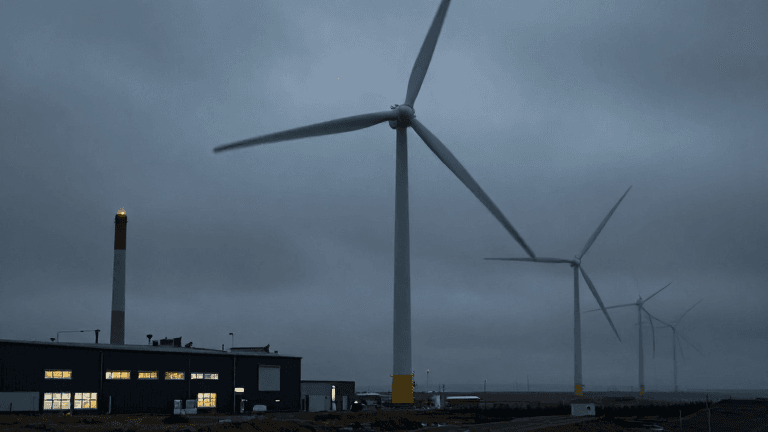
Everyone, today let's talk about Europe's green transition. It's a good story, and also a troubling one. The green transition has been going on for 20 years, and the results are actually quite remarkable: carbon emissions have dropped by 30%, more than anyone else. But what's the result? Now ordinary people can't afford electricity anymore. Electricity prices are 80% higher than in the US, several industries have been killed off, and they can't even build data centers.
Let's start with electricity bills. Europeans now have to ration their heating in winter because electricity costs are absurdly high. The UK did its own survey, and half of all households have to conserve electricity in winter. Heating is turned on only when absolutely necessary, and even then on a timer. Because wholesale electricity costs are 80% higher than in the US. Industrial electricity averages 20.7 cents per kilowatt-hour, twice that of the US and 50% higher than ours; residential electricity is 26.5 cents, the most expensive among all developed countries. All industrial production requires electricity. When electricity prices are high, the cost of finished goods is high. With costs this high, the only option is to shut down. For example, ExxonMobil directly closed its chemical plant in Scotland because electricity costs made it uncompetitive—if Europe keeps going like this, companies just won't play along anymore.
As a result, Europe's traditional manufacturing has been massively lost. With industrial electricity prices so high, electricity demand has fallen, and power generation has fallen along with it. On top of that, the electricity infrastructure is outdated, grid capacity is limited, and even when there is power, it can't be transmitted to where it's needed. Even companies with plenty of money can't get electricity. How can you do AI like this? AI is a power-hungry monster. Last year, data centers in Ireland consumed more than one-fifth of the country's total electricity. No choice but to halt data center construction and wait until 2028. Germany is even more extreme—Frankfurt is Europe's digital infrastructure hub, and now it can't build new data centers either. The power company suggests waiting ten years, until 2035, when power might be available. By 2035, what will AI in China and the US have become? We haven't even figured that out yet.
The domino effect of energy price increases has also exacerbated Europe's political crisis. The original political consensus was to address the climate crisis and promote the green transition, but now that consensus has fractured. Rising electricity prices drive up all prices, and ordinary people's lives are hard. A bad life must be blamed on the people at the top getting things wrong, so anti-establishment parties rise, saying the green transition is designed to screw ordinary people. Actually, European governments aren't deliberately trying to screw people—they're just purely self-destructive. A normal energy transition approach would surely be two-pronged: keep using existing energy sources while gradually increasing the share of renewables. China, the US, and India all pursue green transitions with traditional energy plus new energy advancing together—an AND strategy. Europe went all-in, all or nothing—an OR strategy. The UK shut down its last coal plant last year and banned new offshore oil and gas drilling. Denmark plans to eliminate gas heating by 2035, and Germany will start gradually cutting off gas within the next few years. Such a radical strategy has caused Europe's fossil fuel power generation to drop directly from 1,525 terawatt-hours to 792 terawatt-hours over 20 years. By comparison, the US only dropped 14%, and China increased by 205%. Europe cut off its old leg before the new one had grown, crippling itself.
Logically, Europe really should vigorously develop new energy, because it has few oil and gas resources and must diversify. Spain has brilliant sunshine, the UK has howling winds, Northern Europe has lakes and mountains with excellent hydropower conditions, and France can fall back on nuclear power. It truly is a good hand played badly. Sunlight, wind, and water are indeed free, but to capture them you need large-scale infrastructure investment and grid upgrades. The UK learned this the hard way. A few years ago it said it would turn Scotland into the Saudi Arabia of wind power, launching big projects immediately, but wind power is unstable and the grid couldn't handle it. So they said, don't generate power for now—I'll transmit power from England to you, north from south. Now wind turbines are idle 70% of the time, and it still costs 2.7 billion pounds a year to balance the grid and heavily subsidize wind power—paying you not to generate electricity.
Renewable energy generation is intermittent, so you need to develop energy storage technology, otherwise what do you do on cloudy days? Germany actually does this—because it over-relies on solar and wind, on cloudy days it has to import large amounts of energy from neighboring countries. Sweden refuses: my own country doesn't have enough electricity, no electricity means no industry, no industry means no national defense—you're asking for my life.
Now Europe faces two paths: either take the short-term pain and accelerate the transition, or take the long-term pain and drag it out, but save some money. Indeed, once new infrastructure is built, green energy will ultimately be cheaper. In the next decade, Europe will invest 3 trillion euros in electricity infrastructure, double that of the previous decade. This huge sum is a severe test for an Europe facing population aging, military spending, and debt repayment pressures. It's estimated that Europe's clean energy costs will take another 20 years to come down, but to hold on until then, the price to pay is truly too great.
After sharing this story, I just want to say: the green transition is not easy, and one wrong step is catastrophic.