The Battery War: How the West Is Struggling to Survive Amid Geopolitical Tensions
9/16/2026#动力电池#电池地缘政治#储能产业#中美竞争
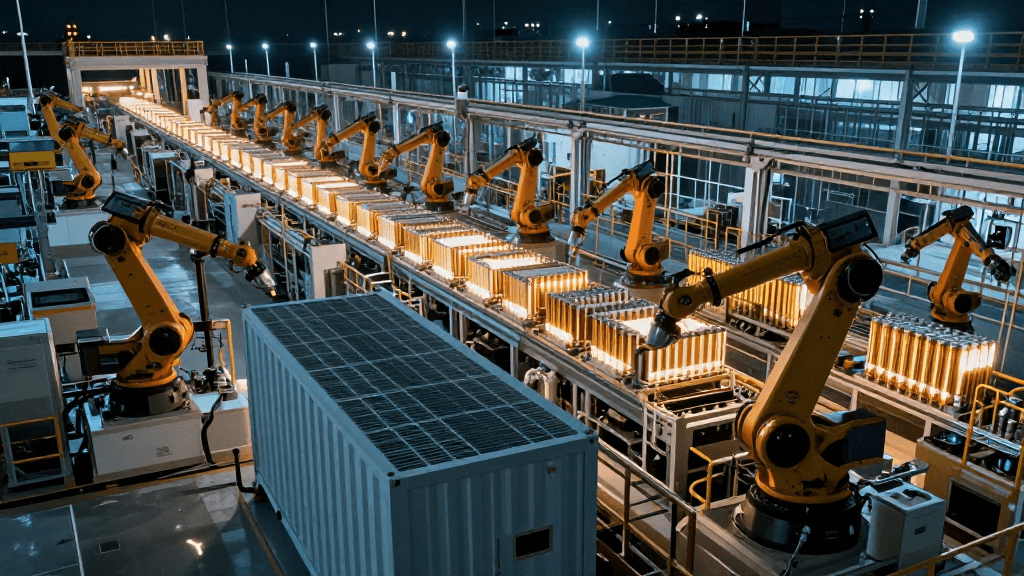
Ladies and gentlemen, the battery war is no ordinary battle. This tiny energy storage device encapsulates the shifting dynamics of the great power rivalry. China excels at every stage of this industrial chain—from upstream to downstream. The U.S. is eyeing this “prized asset,” and some experts have suggested “surrendering proactively”—letting Chinese companies take over the entire market so we can march toward a low-carbon future together with high efficiency. But advocates of self-reliance and control aren’t having it. They argue that this would amount to entrusting our economic, military, and energy security to China—something absolutely unacceptable. Instead, we should keep China out, shut the door, and pour massive investments and hard work into building our own battery industry. The Carnegie Endowment for International Peace released a report titled “The Geopolitics of Batteries,” suggesting a third path: neither conceding defeat to China nor going head-to-head with it alone, but instead rallying OECD partners—the U.S., Europe, Japan, and South Korea—to form a united front, coordinate policies, and cooperate vigorously, while simultaneously making tactical openings to China in key areas. In exchange for high-value markets, we could acquire intellectual property from China and leverage its production capacity to scale up, thereby gradually achieving a strategic balance in industrial strength.
Let’s take a look at the battery supply chain. There are four key raw material categories: cathode active materials, anode active materials, separators, and electrolytes. For anode materials—whether natural or synthetic graphite—China holds the top spot, accounting for over 95% of shipments. China also absolutely dominates downstream battery cell manufacturing capacity, which is the core segment with the highest added value in the entire supply chain. Over the next five years, the global supply landscape will remain highly concentrated in the hands of Chinese companies. So what can the West do? First, they must court South Korea. South Korea, along with other countries and Japan, has long-standing expertise in high-energy-density ternary lithium-ion batteries; in fact, three South Korean companies and one Japanese firm are among the top ten in terms of installed capacity. The West needs to further open its markets to South Korea and Japan and integrate R&D with production capacity; otherwise, they risk falling behind. Second, the West cannot bet everything on a single technological path. Since 2021, nearly all Western battery investments have focused on ternary lithium-ion batteries to meet the range requirements of electric vehicles, but these batteries are costly and have relatively poor thermal stability. Meanwhile, China has successfully commercialized lithium iron phosphate (LFP) batteries. What was once a technology viewed with skepticism now boasts high safety, long lifespan, and low cost, accounting for half of the global lithium-ion battery market—and 98% of that half is produced in China, with a technological lead of approximately four years.
The West must correct its industrial policy by encouraging the use of South Korean lithium iron phosphate batteries while also expanding its own domestic battery cell factories. Europe is also pursuing supply chain localization and encouraging Chinese and South Korean companies to set up operations there. Non-Chinese production capacity is slowly emerging, and the U.S. and Europe need to focus on R&D, prioritize support for South Korean companies, and leverage this to expand non-Chinese production capacity. Introducing some Chinese production capacity is a delicate balancing act. If you ask Chinese companies to set up operations in the U.S. and expect them to share intellectual property, it might not work out. You could end up with China locking you into low-end technology while retaining advanced technology for itself—wouldn’t that be a loss?
In addition to lithium iron phosphate batteries, there are also sodium-ion batteries, silicon anodes, and lithium-metal anode batteries. Sodium-ion batteries offer excellent thermal stability and can operate in both extremely cold and hot environments, addressing the safety requirements of stationary energy storage systems such as data centers. Furthermore, sodium is abundant and inexpensive, and—even better—the production equipment is compatible, allowing for plug-and-play integration with existing production lines. The U.S. and Europe must take the rise of sodium-ion batteries seriously and collaborate with South Korea and Japan on joint R&D. If they do not act quickly, China’s lead in lithium iron phosphate batteries will be repeated in the sodium-ion battery sector. Regarding silicon anodes, China, the U.S., Europe, and South Korea are all ramping up efforts. China is developing pure silicon anodes with a solid-state architecture, while the U.S., Europe, and South Korea are focusing on composite materials. The West holds an advantage in patents and has not fallen entirely behind in production capacity; by 2030, this field will become increasingly diversified. Lithium-metal anode batteries are at an earlier stage of development but offer broader prospects. With extremely high theoretical energy density, resolving safety and cost issues will make them the next-generation disruptive technology. However, with overall investment in clean energy declining, achieving these goals remains a challenge. Lithium-metal batteries are divided into liquid and solid-state types. All-solid-state batteries require new processes and equipment, whereas hybrid liquid-solid structures can be partially adapted to existing production lines, making them the optimal solution at present with significant application potential. Therefore, the report recommends that U.S. policymakers foster an ecosystem for lithium-metal anode batteries, prioritizing hybrid liquid-solid structures as a strategic transition.
Overall, the report proposes a third path—“neither inviting the wolf into the house nor forcibly severing ties”—in which the U.S., Europe, South Korea, and Japan identify their respective market positions, avoid competition, and enhance cooperation. This approach aims to establish a closed-loop system integrating U.S. and European startups with South Korean and Japanese mass production and economic cooperation markets, while selectively introducing Chinese production capacity in areas where alternatives are lacking. This approach will ensure they continue to hold a competitive position in the future and maintain a balance of industrial strength in the new energy era. Ladies and gentlemen, we must navigate this “battery war” with caution to avoid being left in a vulnerable position.