Rare Earths and Helium: China’s Double-Edged Sword in Science and Technology
9/15/2026#氦气#稀土#供应链安全#资源博弈
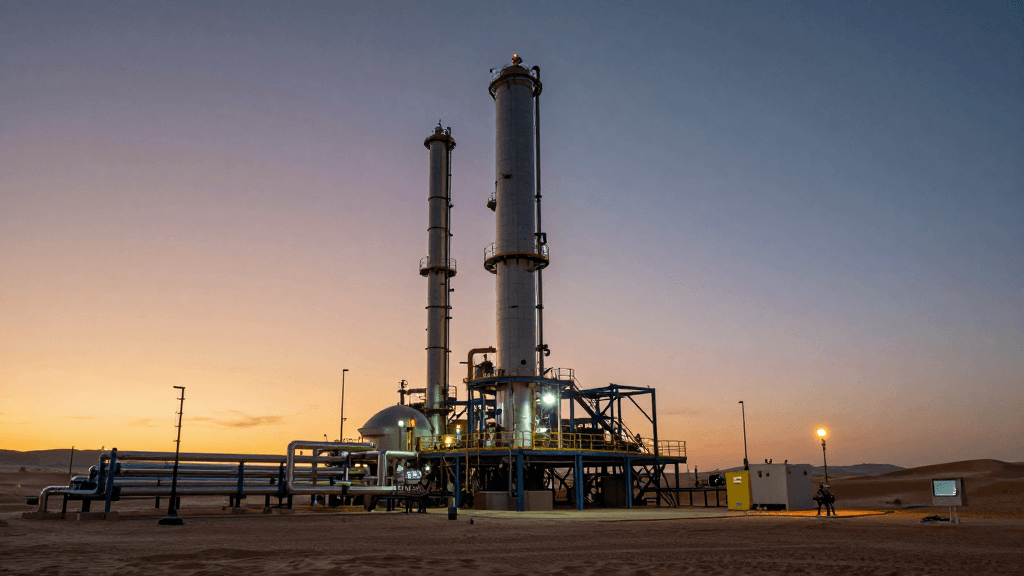
Everyone, do you remember Trump’s first term? Back then, he started imposing chip export controls on us, but why didn’t we retaliate with rare earths at the time? Because everyone understood that rare earths are our trump card. As Comrade Deng Xiaoping said as early as 1992: “The Middle East has oil; China has rare earths.” But the problem is, while this trump card has always been in our hands, we’ve been afraid to play it lightly because there’s one resource from the U.S. that we’re extremely dependent on—helium.
Our demand for helium is truly substantial. Over the past 15 years, it has grown by an average of about 10% annually. Yet domestic supply has long been insufficient, leaving us highly dependent on imports—and that’s a real problem. Helium is crucial in high-tech fields such as cryogenic superconductivity, aerospace, fiber-optic manufacturing, and semiconductor production. Yet, we happen to be particularly dependent on imports in this area—at one point, our reliance even reached 95 percent.
Why is helium so scarce? Global helium reserves are naturally limited and are primarily concentrated in four countries: the United States, Qatar, Algeria, and Russia. The United States alone accounts for 40% of the world’s reserves, while China is a helium-poor country with only 2% of the world’s reserves, and extraction is even more difficult. Among the world’s top ten helium producers, four are U.S. companies, and the other six rely on U.S. technology. Therefore, if the U.S. so chooses, it could completely cut off the supply.
Consequently, the U.S. began reducing production in 2012, leading to a shift in the helium market landscape. The market shifted from being dominated solely by the United States to being split between the United States and Qatar. After the trade war began in 2018, supply chain risks from the United States increased, so we began reducing our imports from there. In 2019, our dependence on the United States fell from 33% to 23%, while Qatar’s share rose to 65%. After the Russia-Ukraine conflict erupted in 2022, Russia emerged as a new major source of supply. From January through August of last year, 65% of our imports came from Qatar and 42% from Russia, while the U.S.’s share dwindled to a meager 2%. The U.S. has absolutely no chance of using helium export controls to strangle us anymore.
If the U.S. were to opt for Qatar’s technology, it would actually jeopardize its own supply and risk alienating a key military and diplomatic ally. Therefore, diversifying our supply sources is essential. We are also working to increase domestic production, but the challenge lies in the low grade of our reserves and the difficulty of extraction. However, in 2024, the Chinese Academy of Sciences’ Annual Science and Technology Achievement Award was presented to the Institute of Physics and Chemistry of the Chinese Academy of Sciences for its large-scale cryogenic refrigeration unit and helium extraction demonstration project. They developed a helium separation membrane that acts like a sieve, filtering out the small helium molecules to produce high-purity helium at low temperatures. This technology has undergone demonstration operations in Ningxia, Yanchang, Chongqing, Fuling, and other locations, significantly increasing the domestic production rate and reducing reliance on imports.
Most of the world’s helium is a byproduct of natural gas extraction. However, the majority of domestic natural gas fields have low helium content and are not commercially viable for extraction. The U.S. industry sets 0.3% as the threshold for helium content to be considered a byproduct, while China has set the threshold at 0.1%. Even at 0.1%, helium is considered a byproduct, but such cases are rare and mostly concentrated in small and medium-sized gas fields. However, in recent years, we have discovered the Hotan River gas field in the Tarim Basin of Xinjiang. Initially regarded as a conventional gas field with 61.7 billion cubic meters of natural gas, it began supplying gas in 2004. In 2019, against the backdrop of the trade war, researchers discovered an ultra-large associated helium reserve in the Hotan River gas field, with proven reserves of 200 million cubic meters. Although its scale is far smaller than that of large U.S. gas fields, it is currently the only high-quality helium resource in China with a helium content exceeding 0.3%.
Research on the Hotan River gas field is ongoing. A recent paper points out that, unlike most helium-rich gas fields worldwide, the Hotan River gas field is characterized as “shallow and low-pressure.” What does this mean? It refers to a geological configuration where the deposit lies shallowly, has low pressure, and is highly uplifted—a very rare geological arrangement. This discovery immediately caught the attention of geologists and strategists worldwide, as it opened up new avenues for thinking, allowing them to view such factors as key elements for future helium exploration. Other papers suggest that many basins in central and western China feature similar geological structures, which should become the main focus of future exploration. Therefore, there is still significant untapped potential in China’s domestic helium reserves.
Ladies and gentlemen, this is why rare earths can play a strategic role as a trade weapon. Although we will still need to import 60% of our helium over the next two to three years, at least it will be somewhat difficult for the United States to strangle us again. Therefore, only through coordinated scientific and technological development—strengthening both domestic and international capabilities—can we truly seize the initiative.