China’s Solar Industry: From Internal Competition to Technological Leadership
9/15/2026#光伏#太阳能#钙钛矿#产业转型
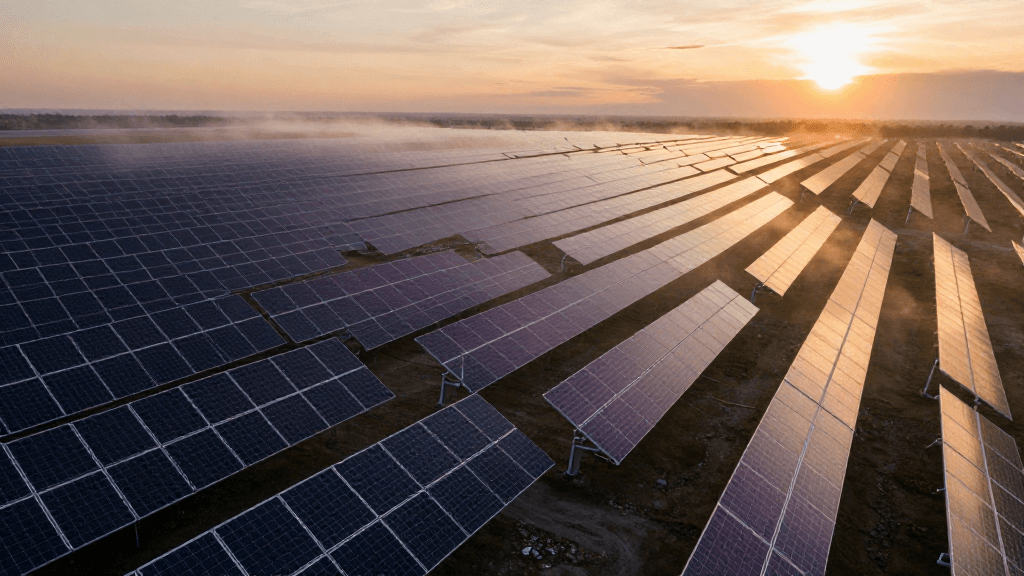
Everyone, today let’s talk about China’s solar industry. After undergoing a major shakeup, this industry seems to have found a new path forward. In the past, domestic companies were all crowding into the same market, and as a result, they all ended up losing money. JinkoSolar, Trina Solar, JA Solar, LONGi, and Tongwei—these five giants cut their workforces by more than 30% in 2020, while over 40 smaller companies filed for bankruptcy, were acquired, or exited the market. This isn’t simply a matter of internal competition; we should also consider what the U.S. think tank CSIS has to say.
The CSIS report states that foreign solar companies not only have no hope of catching up but will actually be left even further behind. Why? Because China’s solar industry has formed a core with sufficient resilience, which will give it an advantage in future technological races. Behind this, our government has implemented a major consolidation drive to phase out outdated production capacity.
Think about it: in 2004, China’s solar patents accounted for only 13% of the global total, while Japan held 43%. By 2009, with government support, companies borrowed money to expand, and most of their production was exported to Europe and the United States. In 2012, U.S. anti-dumping duties and EU trade investigations prompted Chinese companies to shift their focus to the domestic market. Shortly thereafter, in 2013, a period of technological catch-up and large-scale expansion began. Starting with the earliest aluminum-backed field (BSF) cell technology—where China was initially a follower but continuously improved—China’s market share in N-type cell technology soared from 8% to 70% in less than three years. In 2020, as China made its “Dual Carbon” commitments, the industry had already become highly concentrated, and under state leadership, new winners emerged.
However, the government was not satisfied. Companies faced significant barriers to expanding overseas, access to high-value markets was blocked, and intense domestic price wars led the industry into its third phase: market expansion, technological leaps, and proactive global expansion. Since 2023, prices across all links in the industrial chain have plummeted; module prices were halved that year, dropping to 25% of their previous levels in 2024. In 2025, prices of photovoltaic products fluctuated wildly, with wafer, cell, and module prices remaining at persistently low levels. Meanwhile, regulatory restrictions in the EU and the U.S. have intensified, leading to a de facto decoupling of supply chains.
At this juncture, our industry has adjusted its export strategy by shifting toward intermediate products and targeting the Asia-Pacific and Middle Eastern markets, reducing its reliance on the EU, increasing overseas investment, expanding local manufacturing ecosystems, and integrating into regional markets. The government has acted in accordance with these trends: amid the wave of N-type technological transformation, it has phased out P-type cells, tolerated the bankruptcy of some enterprises, and concentrated resources on building a resilient industrial core.
By 2024, our share of global solar patents reached 65%, five times the level of 20 years ago. We are at the forefront of third-generation solar technology, having set two new world records earlier this year: LONGi’s perovskite-crystalline silicon tandem cell achieved an efficiency of 30.85%, while Nanjing University and Renshuo Solar’s all-perovskite tandem cell reached 30.1%. The consolidated photovoltaic industry now stands at the forefront of technology.
Why have we been able to secure this technological high ground? Because China’s distinctive approach to technological innovation involves three interconnected components: the central government provides strategic R&D funding and incentive funds; local governments strengthen strategic implementation through land and tax innovation funds; and at the market level, policy banks, industrial funds, and leading enterprises invest to drive scientific research—together forming a self-reinforcing system. Starting in 2025, the state launched a nationwide investigation into “internal competition” within the photovoltaic industry, guiding companies to shift focus and compete on value and technology.
Ladies and gentlemen, this is not a victory for “internal competition,” but rather the core driving force behind the technology race. Faced with market volatility, companies have no choice but to throw themselves into the technology race, which has become the key to innovation in the photovoltaic sector. Private enterprises have filed 75% of technology patents, and the survival of the fittest is reshaping the competitive landscape of the global solar market. From the perspective of strategic competition, the report by the U.S. think tank CSIS is quite incisive: while market volatility is painful for companies, it serves as a form of encouraged “involution”—Darwinian competition—for national strategy.
The United States must also learn to adopt this realistic and clear national orientation. The free market emphasizes spontaneous competition among enterprises, while state intervention represents “creative destruction.” The economy is like a secular religion; it is normal for different schools of thought to hold differing beliefs. However, the United States still tends to pass value judgments, with policymakers viewing China’s actions as malicious. In fact, the U.S. itself wants to “overtake on a curve” by using state intervention to protect its domestic supply chains. This stance is also consistent with CSIS’s long-standing mindset on strategic competition.
In short, China’s solar industry has already found a new path, and its future global dominance is firmly in its grasp.