What is spatial computing? The definition given by the Answer Lab is wilder than you might think.
10/31/2026#空间计算#ARVR#人工智能#科技观察
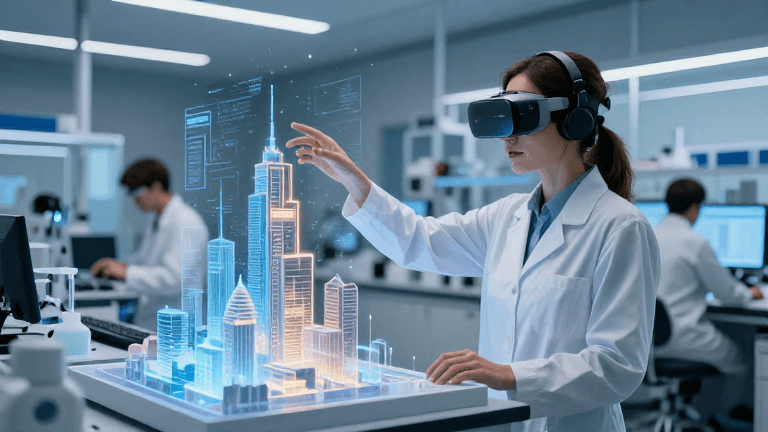
Everyone, someone once asked a pretty basic question: what exactly is "spatial computing"? The definition given by Irena Cronin of Answer Lab sounds a bit unexpected—she says spatial computing is computing that lets people, and people and robots, interact through 3D environments. By this definition, self-driving cars and robots also count as spatial computing.
It needs two things to support it: first, AI, which lets machines understand 3D environments; second, sensing technology, which can identify and locate specific objects in the environment. So the "language" of spatial computing machines and VR machines is actually different. VR and AR certainly use computing too, but unlike self-driving cars and robots, they do not really move through 3D environments.
When it comes to the experience, people's first reaction is still music, movies, and games in VR, and that is indeed a big part. But when it comes to the industries truly being affected, the list gets long: robotics and autonomous driving, healthcare, AR, retail, enterprise services, gaming and entertainment—these last few categories actually no longer feel much like "games."
For example. J.P. Morgan is using this kind of thing; they want machines to understand and learn customer behavior, and then in turn teach customers how to invest. How? Give the customer a VR experience and let them personally go through what they should do, with an effect like having a professional financial teacher standing right beside them.
And education. The entire education industry is being changed by AR, VR, and indoor robots. You can "enter" the classroom and see three-dimensional 3D models—things in biology and chemistry that must be understood used to rely only on imagination; now you have to see their three-dimensional form to truly understand them.