United States: Unable to obtain tungsten ore, they have no choice but to rack their brains
9/14/2026#钨矿#关键矿产#中美博弈#军工#出口管制
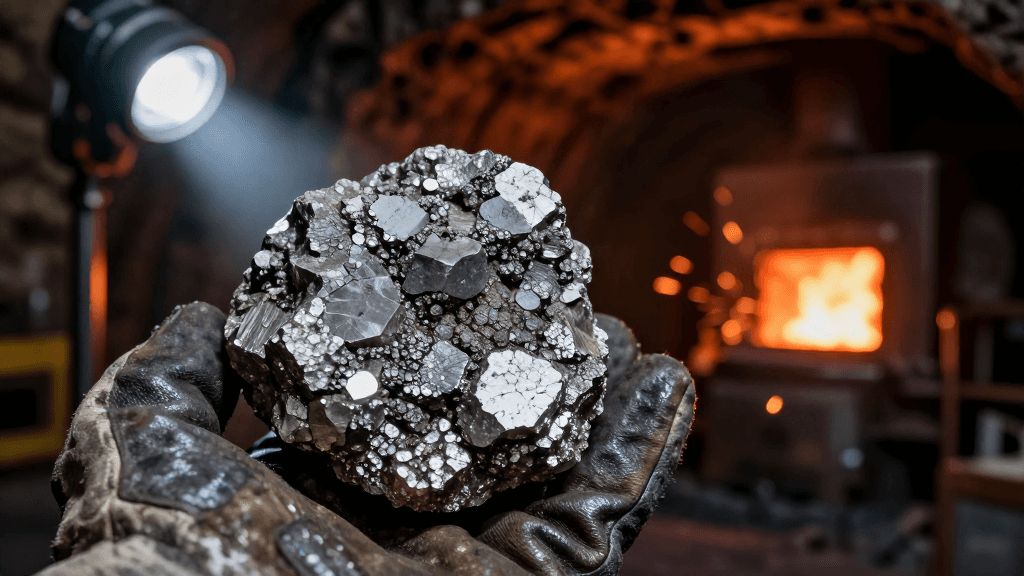
Everyone, let’s not talk about the 1260H list today. Let’s change the subject and talk about tungsten ore. As we all know, rare earths are all the rage right now, but tungsten is actually just as hot. Tungsten ore is yet another mineral battle being waged between our country and the United States. This isn’t some under-the-table deal—it’s out in the open, a head-on showdown. Ladies and gentlemen, as a think tank, our job is to let you know what tricks the foreigners are playing—we’re just calling them out, so please don’t go reporting us.
Tungsten is highly heat-resistant (melting point of 3,422°C, compared to just over 1,000°C for steel) and extremely hard (nearly as hard as diamond). These two properties make it incredibly versatile in industrial applications. The majority is used in cemented carbides, machine tool cutting tools, and mining drill bits. In recent years, the high-tech sector has also begun utilizing tungsten—for example, in the cutting of photovoltaic silicon wafers and chip manufacturing. Tungsten is even found in everyday consumer goods. However, the United States places the greatest value on its military applications: rocket engines, missile tail fins, and armor-piercing projectile cores, among others, all rely on this specialty alloy steel.
I recall mentioning a CSIS report in previous episodes that highlighted some challenges faced by U.S. defense contractors in missile manufacturing, one of which was tungsten. Before the outbreak of the Russia-Ukraine war, U.S. companies had not stockpiled large quantities of tungsten ore; inventories were already low, and the pressure is now immense. Take a look at the global tungsten supply chain: global reserves total approximately 4.7 million metric tons, with China alone holding 2.5 million metric tons—about 53 percent. Australia ranks second at 12 percent, and Russia third at 8 percent. As with many critical metals, China’s advantage lies not only in its reserves but also in its absolute dominance of the midstream processing sector. China accounts for 80% of global tungsten metal production and an even higher proportion of ammonium paratungstate (APT), a critical intermediate product used in cutting tools and artillery shells. All of the United States’ downstream defense industries rely on China for raw materials. China accounts for approximately 30% of the global APT supply, and such a critical supply chain is a real headache for the United States. Moreover, China implemented export quota controls last year.
In February of last year, the Ministry of Commerce, in conjunction with the General Administration of Customs, issued an announcement regarding export controls on tungsten, antimony, molybdenum, and other related items, with tungsten ranked first. The purpose was to safeguard national security and interests by strictly controlling dual-use items—that is, raw materials with military applications. This year, the export control list for dual-use items was updated again to establish systematic, long-term controls specifically targeting military and specialty materials; any item deemed likely to flow into the military supply chain will not be approved. This has infuriated the U.S. military, as a procurement crisis looms. Due to China’s export controls, a dual-track pricing system has emerged internationally: prices in the domestic Chinese manufacturing sector reflect procurement costs and are protected by national macroeconomic controls; prices on the international market, however, reflect a scarcity premium for non-Chinese tungsten. Over the past year, APT prices have skyrocketed by 800% to 900%, far outpacing the increases in gold and crude oil. This is because the U.S. has issued a strict order to completely eliminate Chinese tungsten from its military supply chain in the short term, yet with zero domestic production, it is scrambling to secure every available source on the international market.
But while the U.S. boasts loudly, it faces trouble on its own doorstep. With zero domestic production, it can only rely on scrap—yet recyclers have found they cannot secure the supply. It turns out that suppliers say it’s not that they don’t want to sell to the U.S., but rather that Chinese buyers have offered terms that are impossible to refuse: no matter what price U.S. recyclers pay, we’ll pay a higher price—sometimes as much as five times higher—and we’ll buy whatever quantity is available. Some of these Chinese recyclers conduct private transactions, while others transport the material back to China via third-party companies through Canada and Dubai. Are they executing some kind of strategy—deliberately buying up all the tungsten scrap to cut off the U.S. supply chain? The *Financial Times* says that’s not the case. It’s more likely that output from China’s aging tungsten mines is declining, forcing the country to seek new tungsten resources from farther afield, and China itself needs to recycle tungsten. In 2024, the Ministry of Industry and Information Technology (MIIT) issued industry standards for recycled raw materials to address the challenges posed by China’s heavy consumption of tungsten ore and declining reserves. The goal is to raise the secondary recycling rate of tungsten scrap from 20% to the 50% level seen in Europe and the United States. However, directly importing tungsten scrap does not comply with China’s environmental protection standards. Therefore, the only option now is to source alloy drill bits—which, due to differing regulatory policies, are permitted for import.
Our American counterparts in the tungsten recycling industry have found that this business is no longer as lucrative as it once was. There are no legal restrictions on tungsten scrap in the U.S., so selling it to China is a legitimate business. Congress is trying to pass legislation to restrict exports to China, but will this really work? That’s questionable. Although the U.S. can recycle the scrap—crushing it into powder—it lacks the capabilities for pressing, sintering, and high-precision manufacturing, so it cannot be turned into finished products. From a commercial supply-and-demand perspective, if the U.S. government were to forcibly impose a ban and require that scrap tungsten not be exported: first, the scrap would go unsold and remain stuck with the recycling plants; second, with supply exceeding demand, prices would fall, profits would shrink, and business owners would lose the incentive to recycle—further undermining the recycling ecosystem.
To prevent such aggressive acquisitions by Chinese businesses from further strengthening China’s dominance in the industrial chain, the U.S. devised a strategy of “spreading its bets”—turning to Kazakhstan, a hidden resource powerhouse. Since Kazakhstan does not wish to rely on China, the U.S. aims to mine and process tungsten into APT locally. Tungsten mining and APT refining are highly polluting and energy-intensive industries that are difficult to establish within the United States. APT is shipped to Europe, the United States, and Japan for further processing; these nations all recognize the strategic value of tungsten and view it as a critical mineral requiring political safeguards, given the concentrated risks associated with China’s current dominance of the supply chain. Through the Export-Import Bank of the United States and the International Finance Corporation, the U.S. government supported a joint venture between a U.S. capital firm and Kazakhstan’s national mining company. Trump’s two sons also indirectly acquired shares in preparation for an initial public offering, and “tungsten-themed” stocks on the U.S. market were riding a wave of political momentum.
However, from a rational perspective, this U.S. “de-China-ization” of the tungsten supply chain is a classic case of trading efficiency for security: cross-border logistics are cumbersome, capital expenditures are high, and cross-industry coordination capabilities are lacking, resulting in costs significantly higher than those in China. It can only serve as a fallback strategy for the military and national defense sectors; for civilian industries, the costs are too high, which will weaken competitiveness. Project Blue, a British supply intelligence agency, analyzes that from now until 2030, China’s dominance over the global tungsten supply chain will not weaken; rather, it will evolve from a monopoly on resources and primary raw materials to absolute dominance in high-value-added downstream end products. China’s market share in primary tungsten ore mining and APT refining may shrink from 80% to around 70%, but this will not constitute a major setback, as Western production lines are small-scale and costly, unable to alter the reality of pricing in the global commodities market. China will export more finished components and capture the market for end-use products in the broader civilian manufacturing sector. The industrial chain advantages we have accumulated over decades cannot be undone by a few bans or the opening of a few new mines.