Technology Transfer: A 540-Degree Turn in Western Discourse
9/27/2026#技术保护#知识产权#中国制造#国际观察
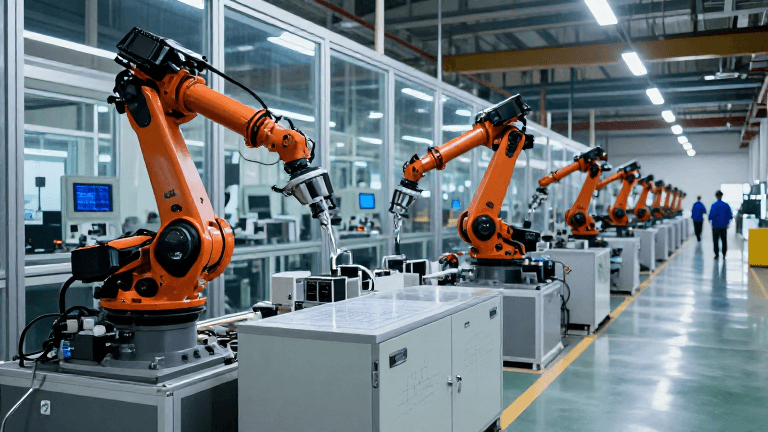
Everyone, we’re always talking about surpassing the West’s hegemony over discourse, but it’s really hard to do. To put it bluntly, their system of discourse boils down to this: what’s good and what’s bad is entirely determined by what they say. Take the trade war, for example. Western governments accused us day in and day out of stealing technology. We explained that we hadn’t stolen anything—it was all done voluntarily by both parties—but our explanations fell on deaf ears. If they say you stole, then you stole—that’s all there is to it. Now, their rhetoric has shifted: technology transfer has become a good thing—after all, excellent things should be shared. “Why is China keeping things under wraps? Hurry up and let go so I can steal a bit!”
A recent article in *The Economist* is truly interesting. It states that the attitudes of Western political and business circles toward technology transfer have taken a 540-degree turn—they no longer worry about the outflow of Western technology. On the contrary, they’re asking: Why hasn’t China’s technology leaked out yet? Why are the barriers surrounding advanced technologies like electric vehicles and AI robots so solid? How come their defenses against us are so airtight? Why can’t we get even a tiny bit of it?
The Economist’s take is: Don’t worry. Knowledge is not a wall; it is like water. It will always flow from high to low, from those who possess it to those who need it. It’s just a matter of time. So, from the Westerners’ perspective, China’s technological capabilities have advanced, and its status has risen. Well then, let’s trade market access for technology. If we allow Chinese companies to enter our markets, they’ll come and set up factories. Doesn’t that mean our chance to learn their tricks has arrived? In reality, it’s not that simple.
China manufactures batteries and energy storage products in the EU, and electric vehicles in Brazil and Vietnam—but have they learned anything? Not really. That’s because China has adopted the U.S.’s advanced approach by establishing an export control system. The stated goal is to protect national security, but in reality, it’s designed to support China’s domestic industries. Based on its export control laws, China maintains a regularly updated list of restricted technology exports, along with registration and approval procedures. If a company wants to export technology, it must apply for a license—and it’s up to the authorities to decide whether to grant it. For example, the transaction between the AI assistant Manus and Meta is under review; this involves investigating whether the company’s core technology is a controlled item on the list, as well as examining team relocations and overseas acquisitions. That constitutes a substantive technology export. Did you apply for an export license? If not, who else would they target?
Consequently, the West suspects that China won’t allow truly valuable technologies to leave the country. But I believe that, given the current broader context, there’s no need for such suspicion. If China holds on tightly and refuses to let go, how is the West supposed to learn? As The Economist pointed out, what we need to learn first isn’t the technology itself, but China’s approach to learning technology—it must be systematic and patient. To learn from the West, the Chinese have, for thirty years without fail, implemented policies to attract foreign investment, matched foreign partners with local ones, set localization targets, and collaborated with foreign universities—all while learning with insatiable eagerness. We must do the same. We must keep a close eye on China’s scientific research achievements and the journal articles published by Chinese researchers, seeking out those research topics that have not yet been commercialized to unlock their potential.
However, the West has its own national circumstances, so it cannot simply copy China’s playbook. It’s unrealistic to expect the government to coordinate the big picture from the top down and lay out the entire strategy for you. Companies must take the initiative themselves. For example, leading international automakers are learning very quickly these days; they’re all flocking to China to set up factories. This is a case of learning from local partners. With so many links in the entire supply chain, each has its own know-how—so learn from them; there’s no end to learning.
The Economist is quite skilled at stirring up trouble, too. It suggests exploiting young entrepreneurs’ lack of understanding and resentment toward China’s technology export control policies. After all, selling to foreigners allows them to command higher prices, but the state won’t let them do that. Since human nature is inherently self-interested, if a larger capital market offers a higher valuation, then even if the government sets up barriers to prevent them from taking their technology abroad, It’s also hard to stop them from making a run for it with nothing but a PowerPoint presentation while the project is still in the theoretical stage.
Besides, what’s the advantage for the West? It’s that intense domestic competition in China has driven down profits, and Chinese companies are eager to go global and partner with foreign firms. So the West needs to play the “market access” card well—it’s incredibly appealing to the Chinese.
Finally, he pointed out that China isn’t self-sufficient in every area; some sectors still require advanced Western technology. So, in an ideal scenario, everyone could negotiate entirely around technology transfer. After all, if China’s technology can’t be exported, wouldn’t that prevent your ingenuity from creating maximum value? The key isn’t whether trade is possible, but whether the price is reasonable. Here’s the problem: *The Economist*, as a British media outlet, believes the Americans are still too stubborn—they’re dead set on maintaining a tight grip on advanced chips. In other words, they don’t understand the principle that “water flows where it will” and are only focused on blocking the flow. If the Chinese were to adopt this American approach, it would be like pitting a needle against a wheat stalk. Once they realize they can’t block it, everyone will naturally be able to sit down and negotiate.