The Future of War: The Two Sides of the Coin—Drones and Robots
9/27/2026#俄乌冲突#无人机#军事观察#战争启示
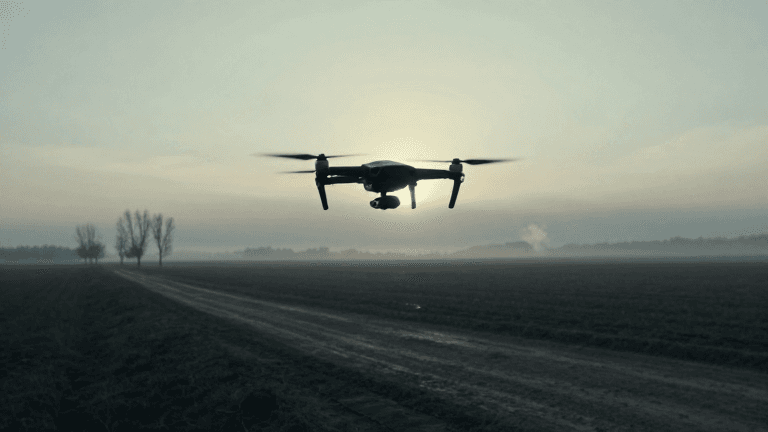
Ladies and gentlemen, if we’re talking about the most talked-about war recently, it’s undoubtedly the Russia-Ukraine conflict. This series of events has not only turned militaries around the world into students but has also sent shockwaves through the tactics of modern warfare. Some have speculated that drones seem to be an unstoppable force. A Ukrainian military think tank has even advised Taiwan accordingly: it is said that strategy must rely on saturation deployment—a deluge of aerial drones, unmanned surface vessels, and unmanned underwater vehicles—to create a so-called “hellish scenario” for enemy amphibious landing forces. However, does this really mean we have to abandon man-driven mobile warfare and attrition warfare?
A report published by the Hudson Institute in the United States has thoroughly shattered this simplistic notion. They argue that limiting Ukraine’s experience to unmanned systems would truly diminish the broader paradigm of the Russia-Ukraine conflict. The core of the Russia-Ukraine war actually lies in the integration of elements such as artificial intelligence, autonomous systems, sensors, and software—compressing the U.S.-coined “Observe-Orient-Decide-Act” (OODA) loop to its absolute limit. Whoever can process information faster will be able to disrupt the opponent and win the battle. Therefore, on the battlefield of the future, decision-making mechanisms must be entrusted to machines, with AI controlling weapons, performing instantaneous calculations, and initiating actions. As for humans, they will be responsible only for oversight, authorization, and intervention at critical moments.
This raises a question: In classic joint operations involving multiple branches of the military, the emphasis has been on rapidly wearing down the enemy or securing advantageous positions to gain the upper hand—deploying troops and firepower at specific times and locations to break through enemy lines. This model is now obsolete on today’s battlefield for three reasons: First, drones, satellite communications, and digital and electronic sensors have made the battlefield transparent—every move you make is visible to the enemy, making surprise attacks difficult; Second, while maneuver forces have the advantage of scale, they are vulnerable to precision strikes during deployment and can be eliminated before even reaching the battlefield; Third, attrition at the front line creates logistical demands, and attacking supply lines is simpler than attacking frontline forces, making it difficult for frontline units to advance.
Therefore, the success of classic maneuver warfare depends entirely on whether the preceding digital attrition war can be won—that is, rendering the enemy’s sensors, electronic warfare capabilities, logistical support, and command networks completely inoperable, leaving the enemy blind and deaf, before launching a firepower strike. The core of this strategy is to first deprive the enemy of its information-gathering capabilities before launching a firepower strike. However, this is not the end of the story; innovation is also required in force deployment. Previous attrition warfare models relied on the relative strength of force pools amid continuous attrition. This type of attrition was predictable and suited to positional warfare, so whoever had more troops won. But how can technology be used to improve the exchange ratio and create asymmetric combat capabilities?
Theoretical physicists have proposed an adaptive model in which both sides in a conflict extensively employ semi-autonomous intelligent agents that constantly adapt to a changing environment. The conflict becomes nonlinear and decentralized. Both Russia and Ukraine have abandoned large-scale, concentrated operations in this conflict and have refrained from deploying infantry to capture every stronghold. Instead, they are using miniaturized weapon systems to adapt to battlefield dynamics, employing drone defenses to conserve manpower, and enabling even small forces to cover vast areas. The outcome of drone operations depends on the operator’s skill level, the intensity of electronic warfare pressure, and other factors—such as the sophistication of software, the visibility of targets, sensor density, the accuracy of terrain data, the resilience of communications, and the response time to countermeasures. It is evident that warfare has reached a stage where, although it has not yet become fully unmanned—with robots fighting in our place—it has evolved into large-scale drone system operations under human command.
On that note, it is worth mentioning what lessons the West should draw from the battlefield in Ukraine. On the positive side, the Ukrainian battlefield may be the most valuable database in military history, as drones have transformed the battlefield into a dense sensor network, generating massive amounts of real-time operational data that can be used to train the next generation of AI military systems. Starting this year, Ukraine has begun sharing military-grade data with its allies; this data is in itself an invaluable asset, which is why it has also become a target for enemy attacks. As for lessons learned, Ukraine has done an excellent job with the rapid iteration and modular design of its drone software, but it remains overly reliant on Chinese drone components. China not only commands 80 to 90 percent of the market for complete drones but also holds an absolute dominant position in areas such as controllers, sensors, motors, batteries, thermal imagers, magnets, and rare earth materials. This means that if China perceives NATO’s strategy to modernize its drone fleet as a threat, there is a very high risk that the supply chain could be severed.
Finally, the Hudson Institute report points out that NATO must both embrace innovation in drone warfare and avoid placing blind faith in drones at the expense of traditional firepower development. It requires a dual combination of combat experience and technological production capacity, shifting procurement from long cycles to rapid iteration, and tactically learning the essence of Ukraine’s approach without being bound by its specific forms. Ukraine is merely a powerful tool for gaining battlefield mobility; strategically, however, one must acknowledge the adversary’s capabilities. For instance, Russia has already established a robust anti-drone ecosystem, while China serves as the cornerstone of the entire drone industry. Therefore, the way forward for the Western camp lies in integrating Ukraine into the core of the European and American defense industries—or, in my words, turning it into a “war laboratory.”