Gout is no longer a 'king's disease'
9/29/2026#痛风#纳米材料#稀土#上海交大
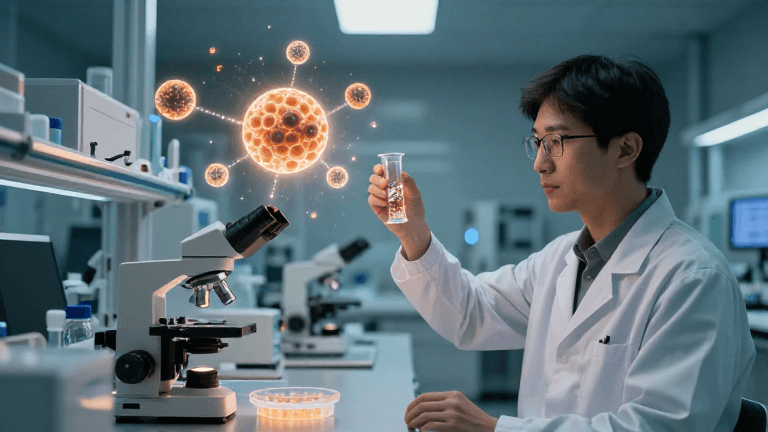
Everyone, the happiest discovery from reading reports today is: gout has a cure. A research team from Shanghai Jiao Tong University may have found a way to completely defeat gout, and this achievement was published in the international top journal *Biomaterials*.
Simply put, they use a rare earth oxide as the wrapper, fill it with uricase as the filling, and then feed this 100-nanometer "dumpling" into your joint cavity. It can dissolve gout tophi and inhibit their regeneration, eliminate arthritis, and has no side effects of traditional drugs.
Gout has not only plagued humanity for thousands of years, but will become increasingly common in the future: in 2020, there were nearly 56 million patients worldwide, and by 2050, it is expected to exceed 100 million.
Gout is caused by both genes and lifestyle. During human evolution, a genetic mutation occurred that led to the loss of uricase, causing uric acid levels to be much higher than in other mammals. In ancient times, this could bring a survival advantage: converting fructose into fat to survive food scarcity. Therefore, only emperors and nobles would suffer from this aftereffect of a life of luxury, and gout was called the "disease of kings" in the West. However, traditional East Asian diets and income levels were not high, so it was not easily triggered.
Now it's different. As living standards rise, intake of red meat, seafood, alcohol, and sugary drinks increases; if not excreted, needle-like sodium urate crystals precipitate and deposit in joints, triggering gout.
Currently, there are many drugs for treating gout: colchicine and glucocorticoids for broad anti-inflammatory and analgesic effects, and others specifically for lowering uric acid and promoting excretion. But none of these drugs can combine dissolving crystals, reducing inflammation, and lowering osteoclast activity. The last point is also very important because inflammation stimulates osteoclasts to cause destruction, leading to joint and bone deformities.
So what is the new solution developed by the Jiao Tong team? It involves filling uricase into hollow cerium dioxide nanospheres. This inorganic shell not only blocks proteases but also deceives the immune system, allowing uricase to safely go to work dissolving urate crystals. However, uricase produces hydrogen peroxide as a byproduct, which can cause severe oxidative stress and tissue damage, so direct injection of recombinant uricase often has this side effect. Cerium dioxide plays a key role here: it can instantly convert hydrogen peroxide into water and oxygen.
This approach has been validated in rats: joint inflammation subsided, cartilage damage almost completely healed, and no liver or kidney problems were caused.
Cerium is the most abundant rare earth element, even more abundant than copper. So although China's reserves account for half of the world's and production for 60%, the United States and Australia also have deposits—Lynas, for example, is a core non-Chinese supply chain. As an industrial bulk commodity, cerium is currently in oversupply, and its medical use accounts for a very low proportion, so production is not a bottleneck.
The real threshold is in the process. Industrial-grade cerium purity of 99.9% is considered good, but medical-grade cerium oxide requires extremely high standards: purity must reach 5N or even 6N, with no residual heavy metal elements; particle size must be precisely controlled to easily penetrate biological barriers without aggregating in blood vessels and causing embolism; most importantly, the surface valence state—the ratio of trivalent to tetravalent—must be precisely controllable to scavenge free radicals and treat inflammation.
In the preparation of high-purity cerium oxide, China has a disruptive cost advantage. A major problem in the West is insufficient pilot production capacity, leading to high preclinical R&D costs and long cycles. Looking at frontier mechanism research: China's total number of papers exceeds that of the United States, but the U.S. remains pioneering in biological mechanisms and target research, and there is a huge gap in clinical translation. Our real threshold comes from nanoengineering and synthesis processes—the structure and surface modification of nano cerium oxide are very important, and we have an overwhelming advantage.
It can be said that China is "materials waiting for biology," while the U.S. is "biology looking for materials." I hope that one day, gout will truly no longer be the "disease of kings" that has plagued humanity for thousands of years.