Is watching soccer at home better than going to the World Cup? Is it worth the money?
9/23/2026#世界杯#体育经济#门票泡沫#国际观察
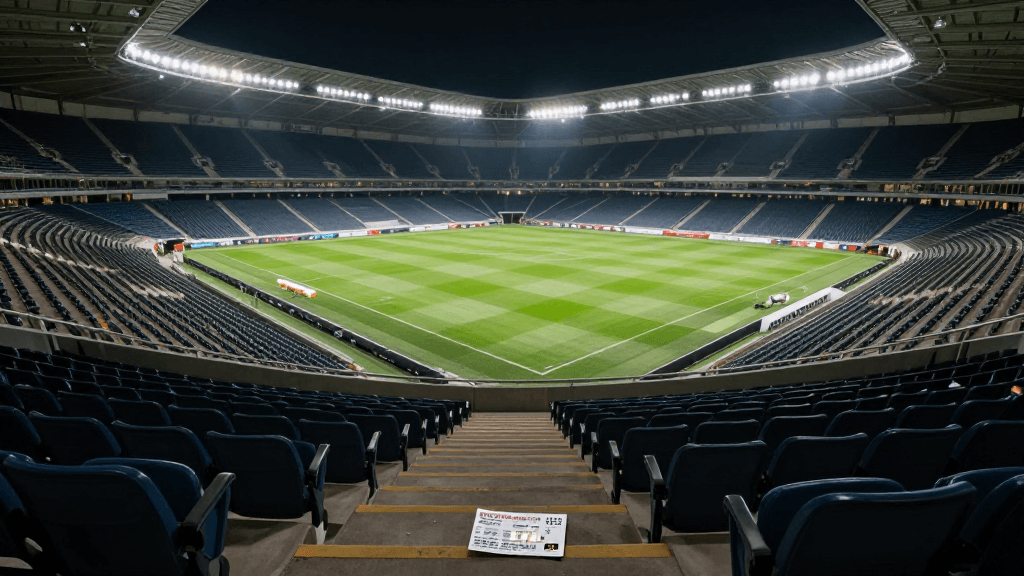
To all soccer fans and viewers out there: While the whole world is gearing up to head to the U.S. for the 2026 World Cup, let’s not rush to buy plane tickets just yet—let’s first take a look at what this World Cup is really all about.
**First Hurdle: The Financial Test**
Let’s talk about transportation costs. A train ride from New York normally costs $12.90, but during the World Cup, it’ll jump to $150. That’s more than ten times the usual price—just thinking about it makes you realize these train tickets are more precious than gold.
**Hurdle #2: Exorbitant Ticket Prices**
Then there are the tickets. The BBC interviewed a British father and son who are soccer fans; to save money, the pair camped along the way, but at $1,200 per ticket, this is nothing short of “robbery in broad daylight.” Meanwhile, resale prices for the final soared as high as $73,000—that’s over 500,000 RMB per ticket! The BBC’s economics editor defined this World Cup as a “K-shaped economy”—where the wealthy climb higher while ordinary fans fall further behind. It’s heartbreaking just to think about it.
**Hurdle No. 3: The Visa Hurdle**
The visa process is another headache. For example, FIFA referee Omar Alton was denied a visa upon arriving in Miami and had to turn back. Fifteen officials and staff members from the Iranian national team were also denied visas, forcing them to relocate their training camp to Mexico. And yet FIFA still had the nerve to say, “We do not get involved in the host country’s immigration procedures.”
That’s just how torturous this World Cup is—if even referees can’t get in, what hope do the rest of us have?
**Hisense: The Savior of Technology?**
But we can always choose to watch the games at home on a Hisense TV—which is even more enjoyable than going to the U.S. As a World Cup sponsor, Hisense isn’t just spending money; they actually have the technology to back it up. The TVs used by VAR officials at this World Cup are made by Hisense. FIFA President Infantino personally tried one out at the Dallas International Broadcast Center and posted a video. The screen that FIFA referees use to make their final decisions employs the same RGB technology as the one you use to watch the games at home.
**Why Did FIFA Choose Hisense?**
The reason Hisense earned FIFA’s recognition is that its technology is truly impressive. Ordinary TVs use white backlighting and rely on color filters to produce colors; when the screen is bright, too much light passes through, causing the image to appear washed out and with color distortion. But Hisense’s RGB mini-LED is different: the red, green, and blue chips emit light directly, ensuring colors are accurate right from the source. In layman’s terms, the green of the soccer field is exactly the same as the green on the TV screen. While ordinary TVs can only control brightness, Hisense’s proprietary Xinshi AI picture quality chip enables simultaneous control of both light and color. The color control precision in each zone is exceptionally high, resulting in more natural colors without light-zone blurring.
**The Thrill of Watching Sports**
Additionally, the Hisense E8S features a native 4K 180Hz refresh rate, paired with the Obsidian Pro display, which prevents the screen from appearing washed-out or reflecting light—even with the lights on during the day. The immersive experience is top-notch too. Equipped with Devialet speakers and Paris Opera-level acoustic tuning, along with 10 sound units and bass extending down to 45Hz, you’ll hear every detail—from the crowd’s cheers to the dull thud of the ball hitting the net.
**Conclusion**
Sports fans, let’s face it: spending hundreds of thousands of RMB to fly to the U.S. for a game only to sit on the edge of your seat isn’t worth it. Why not save that money and treat yourself to a Hisense E8S instead? Watching the game at home is comfortable, convenient, and free from all the hassle. Don’t wait until it’s too late to regret your decision.