Americans are incredibly competitive, and so are we.
9/18/2026#加班文化#预制菜#美国职场#快餐
Hey everyone, I’ve been taking care of the kids all day, so I wasn’t planning on writing anything. But just now, while flipping through a book, I came across a passage that struck me as pretty interesting, so I thought I’d share it with you all.
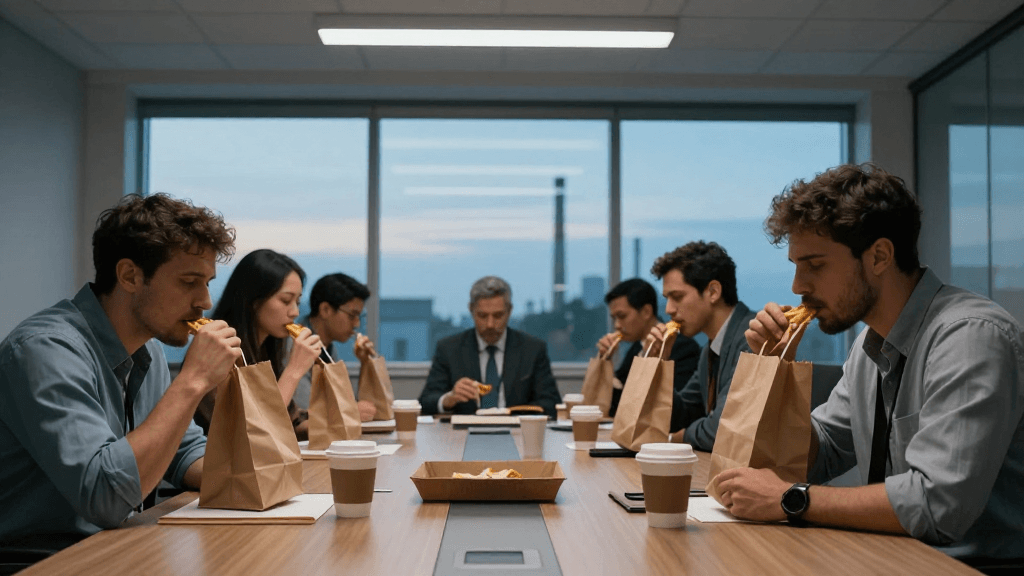
These days, the competition in our country is off the charts—everyone’s acting like the “King of Cutthroat Competition,” and it’s gotten so intense that even the air feels tense. Actually, if we look back at history, Americans were also the “kings of competition” during the heyday of their manufacturing industry. In the eyes of Europeans, Americans were terrifyingly competitive. And what about the British? They’d wake up in the morning and still be enjoying a hearty English breakfast, completely baffled by how Americans could have invented such an inhumane concept as the “breakfast meeting.” Not only did they have meetings over breakfast, but they even had meetings over lunch and dinner? Americans must be crazy—always using meetings to fill their stomachs. What’s even more off-putting is that they focused solely on devouring their food as quickly as possible, with no regard for flavor. They’d wolf it down in a flash, fill their bellies, and then rush back to work—that’s what really mattered.
In 1820, Europeans staying at a hotel in Boston found the facilities to be first-rate and resplendent with gold and splendor. But the people were truly a sight to behold—they’d eat a meal in just five to ten minutes, and once finished, chaos would ensue, creating a stark contrast to the hotel’s elegant atmosphere. Americans have long been this way; everyone consciously sacrifices taste for speed. As a result, they have no true gourmet cuisine—only fast food. It’s essentially an industrialized version of “egg drop soup”—a product of half-hearted effort.
The book also notes that Americans have elevated this culture of rushing to a value system, linking it to the Protestant work ethic. People compare themselves to one another—who appears to be the most dedicated to work—and in turn look down on hedonists. Eating an extra hour or sleeping an extra hour means working an hour less and serving God an hour less. It’s not just about eating; Americans pursue speed in everything they do—they walk as if jogging and drive as if their lives depended on it. To meet this demand, automakers invest far more in pursuing speed than in safety or fuel efficiency. The same goes for other products; the market has grown accustomed to saving time and being efficient, and this mindset has become deeply ingrained.
Consequently, businesses are forced to prioritize speed and efficiency. The products they create must be easy to use and operate seamlessly; there’s no room for even the slightest flaw that might slow down the user’s pace. At the 1851 Crystal Palace Exhibition, the British were stunned by America’s rapid development, marveling that Americans were the fastest people in the world—unmatched in the speed of both living and procreating.
Alright, let’s just lay it all out there today. The book is called *A Century of Assembly Lines*—check it out if you’re interested. These days, we’re all working on assembly lines, tightening screws, eating prepackaged meals, and putting in unpaid overtime—all blessings for us wage earners. We’ve already tried just about everything the Americans have to offer, and thankfully, prepackaged meals are on their way—they’re the tastiest of all. Pushing our kids to excel is really exhausting, though.