Northeast China, and My Curious Heart
9/18/2026#中美交流#文化观察者#对谈#中国形象
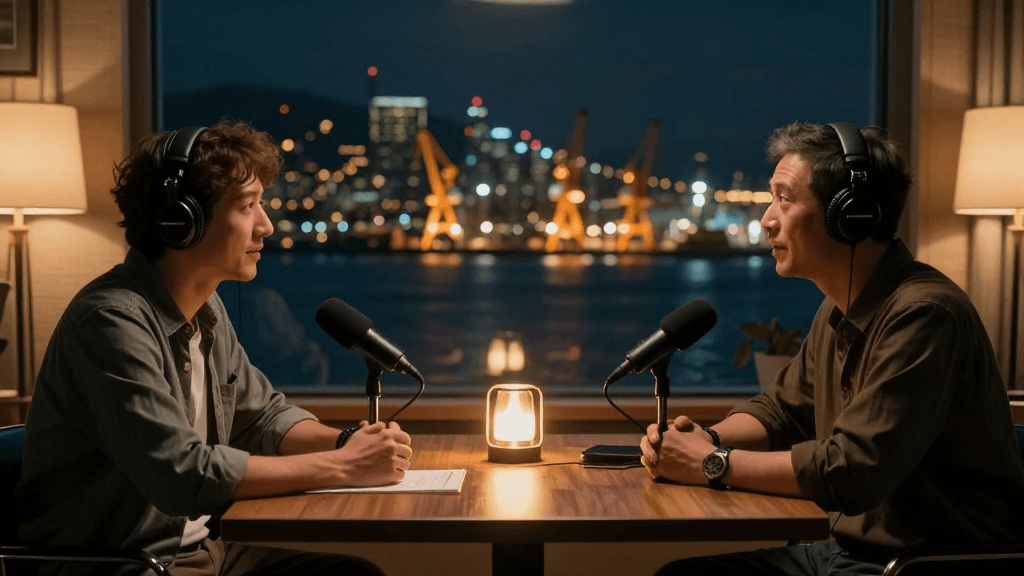
Everyone, let’s talk about China. Specifically, the place I most want to visit is Northeast China. Why? The history and culture of the Northeast are just so fascinating. Speaking of which, let me tell you a bit about my parents. They’re from the Northeast, but I’ve never been back there myself. I’ve traveled all over China, but I haven’t really been to the Northeast. Dalian is the place I’d most like to visit and study in. Why? Because Dalian is different from other cities in the Northeast. It has its own unique history and stories. But let’s get back to the Northeast. The Northeast—especially Liaoning—with port cities like Dalian, is steeped in countless tales of war. The War to Resist U.S. Aggression and Aid Korea, along with various conflicts with neighboring countries, have imbued the region with a rich historical atmosphere. My parents really loved it back then—why? Because of the warmth and humanity of the people there. They say Northeasterners are warm-hearted, have many friends, and are always willing to help one another. Isn’t that exactly the kind of story my parents used to tell me when I was a kid?
Next, let’s talk about the different layers of Chinese culture. Traditional practices, like making dumplings, are what China hopes the outside world will understand; the “Chinese Bridge” events showcase a modern, open image. Then there’s grassroots culture and all the online phenomena—fresh and interesting. When I engage with these things, I feel right at home. My parents taught me that China is all about making dumplings. That’s true—people in Northeast China do make dumplings. But that’s just my parents’ perspective, since they’ve lived their whole lives in the Northeast. The things I saw growing up are my most authentic impressions of China. However, with the internet’s growth, I’ve been able to experience so much more. No one from any one place is “authentic”—the same goes for the United States. Recently, a fan asked me on TikTok where in China is the most fun to visit in the summer. I asked him back: “China is so big—where do you want to go?” Northeast China has snow and ice in the winter, while Hainan and Fujian are great year-round—there are fun places everywhere. But I’m genuinely concerned that labeling China in any way limits its diversity. For example, saying you absolutely have to go to the Northeast to eat dumplings—isn’t that too narrow a view?
The traditional Chinese culture I was exposed to as a child—such as the phrase “plan thoroughly before taking action” from *The Art of War*—makes China seem particularly fascinating to me. It’s translated into English as “think before you act,” but the Chinese phrase “plan thoroughly before acting” carries such solemnity—it feels like the words of a wise person. Lately, I’ve been wondering if I should conduct my research in both languages to examine these issues from different perspectives. This might be my advantage as an observer, since I’m deeply interested in this kind of research.
Next, let’s talk about “woke” culture. I didn’t really understand this term before, but later realized it simply refers to some people conducting their own investigations and proposing new ideas. Some feel it goes too far, while others worry it threatens free speech. This reminds me that, in fact, my parents’ generation had a similar “woke” mindset. They were open to new experiences, like traveling to India or China. Wasn’t that their generation’s version of “woke”? As they grew older, their perspectives settled down. The “culture wars” people talk about today seem to be just another cycle. As the Daoists say, everything goes in cycles.
Ladies and gentlemen, let’s now turn to the “culture wars” in the United States. Some say the U.S. is heading toward civil war, but I believe the country has always been caught up in various conflicts. This is the very foundation of our nation. Through conflict, we’ve learned how to coexist peacefully. These are my observations on Chinese and American culture—and my unique perspective as an observer.