The EU's "encirclement" plan against Chinese e-commerce: higher tariffs, slow-cooked logistics
11/4/2026#跨境电商#欧盟关税#中国电商#国际贸易
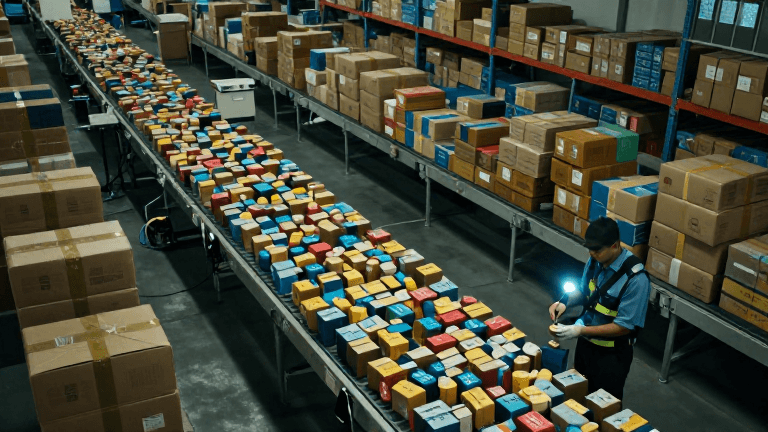
Everyone, as you know, the EU recently took action against Chinese e-commerce. Starting July 1, the EU abolished its long-standing tariff exemption policy for small parcels valued under 150 euros, which means every small parcel now has to pay tax. Why? Because small parcels became the "fast lane" for Chinese e-commerce to enter Europe. Last year, 5.9 billion e-commerce goods worth under 150 euros flooded into the EU, of which 5.47 billion—93%—came from China, equivalent to 173 parcels shipped from China to Europe every second. The parcel colors of the three overseas e-commerce giants are distinct: red is Alibaba's AliExpress, blue is Shein, and yellow is Pinduoduo's Temu. The number of their small parcels sent to Europe rose from 1.1 billion in 2023 to an estimated more than 2.3 billion this year. Imagine a parcel stuffed with all kinds of small goods—previously tax-free, but now it's not so simple.
The EU believes this model distorts the market. The core categories of cross-border e-commerce—clothing, accessories, and bags—would originally be subject to a 12% tariff under the EU's traditional customs rates. Overseas online shopping is essentially opening a duty-free shop for Chinese small goods right at Europeans' doorsteps. With China's production capacity and supply chain, their price competitiveness crushes local retailers, and Europeans are thrilled to shop from China. Last month in Serbia I met a family from Montenegro; their two kids said they really love China, "China No.1," because Temu has so many toys—Chinese e-commerce has practically become a vehicle for exporting national soft power. But the EU is not having it: local retailers already have high costs, and Chinese e-commerce platforms are exploiting loopholes in the customs system to avoid taxes—this is unfair competition. Moreover, low costs and huge demand put enormous pressure on customs; the system simply can't inspect them all. 65% of small parcels have inaccurate valuations, false declarations, or are released without verified safety information. So the EU has started tightening the screws on Chinese e-commerce going abroad.
The EU's new rules impose a fixed 3-euro tariff on small parcels under 150 euros, but not per item—rather per category of goods within the parcel. For example, 5 pure cotton T-shirts incur 3 euros, but if there are sunglasses it becomes 6 euros, and shoes 9 euros. Later this year a 2-euro handling fee may also be introduced. In addition, digital customs security screening will become stricter, which may lengthen logistics times.
By 2028, the EU's overall customs reform will completely eliminate the 150-euro exemption threshold, and all imported goods will be dynamically taxed from the very first cent. As a result, the tariffs that Chinese e-commerce could previously avoid will have nowhere to hide, which is a huge challenge to the cost structure of Chinese e-commerce.
The EU has also amended relevant laws to treat overseas online shopping consumers as importers. If safety problems arise, such as illegal chemicals, the consumers themselves are responsible. Platforms are merely intermediaries and bear no liability. Now, e-commerce platforms are regarded as importers and must be responsible for safety inspections—if dangerous products enter Europe, you are liable, otherwise you will be fined. Legal risks may also arise at other compliance levels—for example, the "if you're a friend, help me cut a slice" model, which Europeans are crazy about, led to a hefty fine in May for compliance issues. These trends are not good news for businesses.
But the Chinese authorities are not shielding them, which is completely different from China's electric vehicle industry. In those areas, the EU accuses China of overcapacity and uses higher tariffs to set import quotas, and China opposes that. But regarding the EU's restrictions on Chinese e-commerce, China is punching cotton—no rebound. Today I saw someone analyze that China itself does the same thing about e-commerce tax evasion. If you look back at a 2010 China News Service report, the General Administration of Customs responded to the 50-yuan threshold for tariffs on cross-border mailed goods, explaining why it changed: in the early days of the founding of the PRC, goods were scarce, and to accommodate conditions, personal postal items were given tax exemptions; the old 1994 rule was that personal parcels had a limit of 1,000 yuan per shipment and a tax exemption of 500 yuan, meaning items under 1,000 yuan were basically all tax-free. But later this warm-hearted policy was exploited by e-commerce for profit—during the e-commerce boom, overseas purchasing agents used the tax exemption to split high-value goods into many small parcels mailed back to China to avoid taxes and sell them. The General Administration of Customs pointed out that such illegal acts not only caused a loss of national tax revenue but also evaded state control over imported goods, allowing relevant goods to flow into the domestic market without safety, health, and quality checks, and consumers could not obtain due protection. These few sentences can be copied verbatim into the EU's official policy. As the saying goes, do not do unto others what you do not want done unto yourself—what China wants is fairness.
What China opposes most is the West using the so-called excuse of overcapacity to suppress China's efforts at industrial upgrading. China will not watch the enterprises it most wants to support being bullied by unfair, unequal policies, but that does not mean it will defend all the interests of all Chinese enterprises at all times—even when they are unreasonably taking advantage of others. Another point: this e-commerce cost-cutting model is no longer small profits but quick turnover; it is a vicious price war. The capacity of the industrial Cthulhu certainly has its low-end side, but China cannot be tied to the development path of low-value production—otherwise, what is industrial upgrading for? Isn't it precisely to innovate and move toward the high end of the value chain?