The Myths and Realities of Taiwan's Drone Industry
10/30/2026#无人机#台乌勾连#台海局势#国际观察
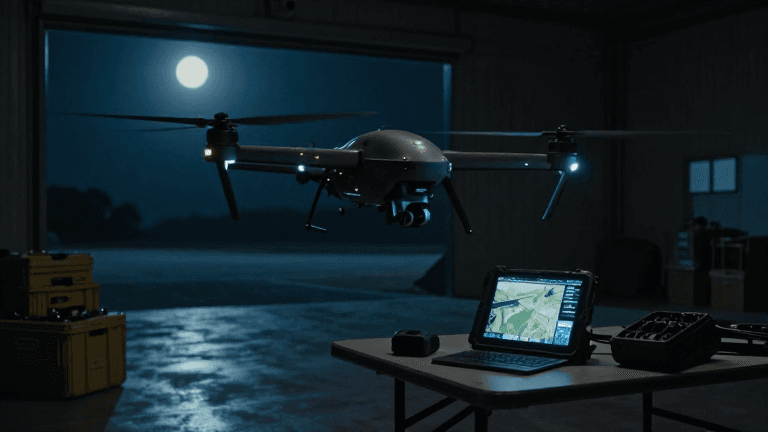
Everyone, let's first talk about the current state of Taiwan's drone industry. This matter must start with the drone cooperation between Ukraine and Taiwan, which is quite close. Ukraine teaches Taiwan hand by hand how to modify Chinese civilian drones and also imparts how to use drones on the battlefield. What is there to worry about? We have long established a three-dimensional regulatory system. Not to mention Taiwan, even the United States may not be able to bypass our restrictions.
However, Taiwan does have some small calculations in the drone industry. You see, there is complex drone trade between Taiwan and the Czech Republic and Poland. Last year, Taiwan sold more than 70,000 drones to the Czech Republic and more than 30,000 to Poland, but most of the drones went to Ukraine. Conversely, US defense contractors also sell battlefield-validated drones to Taiwan, planning to assemble them locally in Taiwan and then sell them to Ukraine. The Taiwan authorities see an opportunity and want to use Ukraine's war needs and the West's supply chain anxiety to build a so-called "arsenal of democracy."
Taiwan has organized more than 250 enterprises and signed cooperation agreements with European and American companies, preparing to localize key technologies in the drone field. Now, Taiwanese companies have gone overseas to build factories in Lithuania and Poland to serve the Ukrainian battlefield. In addition to trade cooperation, Ukraine also has a large amount of drone combat data, which has become a strategic asset. Ukraine shares it not only with Silicon Valley but also with Taiwan. The Shedao Institute advises Taiwan, suggesting that Taiwan learn from Ukraine's model, innovate quickly, and build asymmetric combat power.
However, we must face reality. In terms of drone strength, China absolutely has the advantage. Our consumer drones account for more than 90% of the global total, commercial drones 70%, and although military drones are expensive and few in number, models like the Rainbow and Wing Loong are not sold to either Russia or Ukraine. In 2023 and 2024, we imposed controls on drone exports, but Ukraine believes that Russia obtained preferential treatment through transshipment. Since 2024, Ukraine has sought to reduce its dependence on Chinese components.
In March this year, US media reported that Ukraine was already able to manufacture drones without Chinese components. Of course, this does not mean they actually do so. Chinese components, such as motors, carbon fiber frames, and lithium batteries, have huge cost advantages. Ukraine treats drones as consumables and must consider costs. Ukraine's upstream products for localized production of components still depend on China, and China's advantage is difficult to shake.
The United States sees the risk in the supply chain and is stepping up efforts to promote domestic production of drones. Silicon Valley capital, Japanese sensors, Taiwanese semiconductors, Israeli electronic warfare experience, Ukrainian battlefield data, and Polish logistics form the Feihong supply chain. Although core components such as motors, batteries, and fibers cannot yet be mass-produced, this trend may persist for a long time. European suppliers producing components for Ukraine not only help safely relocate military production lines but also build a local military industrial chain. This does not mean they can squeeze out China, but it makes China realize that the West has alternatives.
Maintaining balance is important. The United States must ensure a stable supply of rare earths and magnets, because 90% of these key materials are made by China. The United States wants time to scale up production and secure supply so that it can gradually increase its production scale. Facing Taiwan's drone production capacity, we cannot simply regard it as an economic issue, but as a strategic issue. Taiwan's drone output value grew 2.5 times last year, and it plans to achieve one-third local manufacturing of rare earth magnets by 2030.
Taiwan's drone industry is not just an economic issue, but the core of the housing system. Facing the Feihong industrial chain, we should clearly assert our interests. Taiwan's drone industry is by no means ordinary market behavior, but a strategic issue worth deep thought. We must ensure our advantage in the supply chain, maintain a delicate balance, and not touch the bottom line of core interests.