The Reality of China: An Unreal Dream
9/14/2026#反毒#娱乐产业#中国法律#零容忍#媒体管制
Hello everyone, and welcome to “The Reality of China.” I’m Chris. In this episode, let’s talk about what’s going on in China.
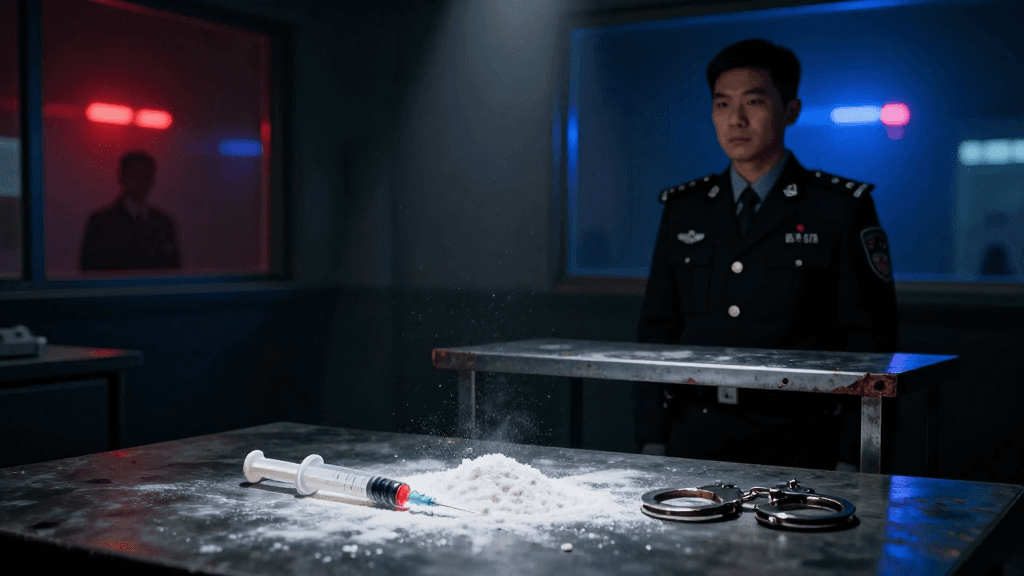
Have you ever heard about just how strict the laws are in China? Take, for example, a former singer from the 1990s named Han, who was arrested by police in 2009 for drug use. He was sent to a drug rehabilitation center for three years and later even became an anti-drug awareness ambassador for the Beijing Municipal Government. After his release, he changed his name to Han Pujun and used some of his money to establish a charitable foundation. This past year, he returned to his former career in the entertainment industry, appearing in quite a few TV dramas. There wouldn’t have been a problem with that, but this time his acting was a disaster, causing quite a stir. Our country’s anti-drug policies are truly strict; for drug users to return to the entertainment industry is an incredibly difficult task. It seems Han’s acting career is now over, but a discussion about whether “artists with a history of drug use deserve a second chance” has quietly begun—and quickly fizzled out. The public’s stance can be summed up in one phrase: No.
As for drug testing, China has strict legal provisions. Once caught using drugs, it’s extremely difficult to reintegrate into society. For example, China’s highest media regulatory body has outright banned all drug-related television programs and media broadcasts. Legal scholars believe this regulation should apply to all platforms, including live streaming and commercial performances. Therefore, once someone is implicated in drug use, their career is over—not because the law is lenient, but because it is even stricter.
The imprint of history also influences China. The Opium War during the Qing Dynasty led to conflict between China and Britain, triggering what became known as the “Second Opium War.” This was not merely a war; it was a shameful chapter in history. Today, on Beijing’s Tiananmen Square, the Monument to the People’s Heroes commemorates this history. On its pedestal, you’ll see reliefs depicting eight large-scale revolutionary events, symbolizing a new beginning for China. The very first scene depicts the Opium War of 1839. As for whether the United States would deal with drugs the same way China does—or the way DEA agents hunted down Pablo Escobar—that is another matter entirely.
Next, let’s talk about morality and culture. In China, the power of the state far exceeds that of the church. Stalin once referred to cultural workers as “engineers of the human soul,” a concept that has deeply influenced China. Music, film, literature… these cultural products are all shaping the moral values of the Chinese people. Conversely, if the government wants to guide these cultural products, it must crack down on immoral behavior.
Money is also a major issue. In China’s entertainment industry, the environment for idols is quite harsh. If a scandal breaks out, not only will they face public outrage, but their entire career may be ruined. This is essentially another form of “cancel culture.” For the sake of money, idols may abandon all moral boundaries. As a result, moral standards in Chinese society are becoming increasingly blurred.
Of course, China’s stance on drugs is extremely strict. In Chinese, “drug” is translated as “毒品” (duopin), clearly distinguished from “药物” (yàowu, medicine); all prohibited substances used for non-medical purposes are classified as “毒品.” Even a single encounter with them could be “fatal.” In comparison, actual poisons are actually quite honest—we know they’re toxic, and we know they’re medicine; but drugs are cloaked in the guise of pleasure. This is truly an interesting social phenomenon.
Well, that’s it for this episode of *The Reality of China*. We hope you enjoyed it. If you have any thoughts or comments, please email us. See you next time on the show.