Singapore: A Small Country with Big Ambitions, or a Pawn in the International Order?
9/25/2026#新加坡#外交观察#东南亚#国际关系
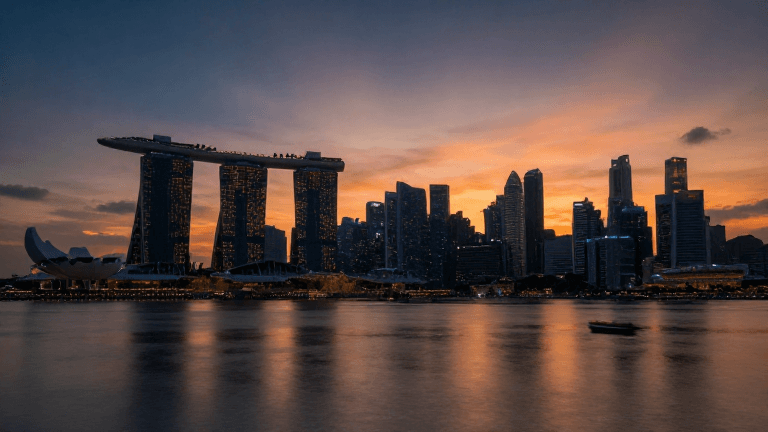
Folks, Singapore has really been making quite a splash on the international stage lately, with a dizzying array of statements. Take Lee Hsien Loong, for example: on January 8, in his capacity as Senior Minister, he expressed serious concern over U.S. military intervention in Venezuela. What? A tiny country is weighing in on global affairs? We don’t expect you to be some great sage, but your statement “opposing violations of international law” does confirm the Singaporean Foreign Ministry’s declaration—you really are “small in size but big in attitude,” as if you’re afraid people won’t notice your small-country mentality.
Back when the Russia-Ukraine conflict broke out, Singapore clearly took a stand against Russia and even imposed sanctions. This prompted netizens to “call out” Lee Hsien Loong, asking if he dared to say “no” to the U.S. as well. Sure enough, Lee Hsien Loong did not disappoint the netizens’ “generous expectations”; he delivered a lengthy speech on Asia-Pacific affairs and even indirectly brought up China. Does this remark imply that China is all talk and no action? Let’s just assume he was hinting at that. But Singapore’s attitude of “telling others what to do” makes it seem as though they’re standing on the moral high ground, always ready to point fingers.
Then there’s Huang Xuncai, the new prime minister who took office last year—he’s even less cautious than Lee Hsien Loong. Last November, when Sanae Takaichi’s erroneous remarks sparked tensions between China and Japan, he told the editor-in-chief of Bloomberg that Southeast Asia hoped China and Japan would ease the tensions. He also acknowledged that Sino-Japanese relations are complex, shaped by both the strategic competition between China and the U.S. and territorial disputes—but note that he used the Japanese term “Senkaku Islands” rather than “Diaoyu Islands.” Despite this being a term that could not be clearer in the context of the “One China” principle, he deliberately chose the Japanese terminology and went so far as to claim that Southeast Asia had already put history behind it and was moving forward in its relations with Japan. As soon as these remarks were made, netizens in Singapore and across Southeast Asia erupted in outrage, lambasting him for “forgetting his roots” and accusing him of letting historical issues fade into the wind.
In contrast, former Singaporean Foreign Minister Yang Rongwen’s remarks were far more cautious. Yang Rongwen explicitly stated that Singapore should not intervene in the dispute between the United States and China, as doing so would only drag the country into the conflict. However, Huang Xuncai does not seem to share this caution. In an interview, he mentioned that regarding export controls, whatever treatment the U.S. seeks, Singapore would provide similar arrangements—because export controls are not unique to the U.S., and “long-arm jurisdiction” is a tool that becomes easy to wield once put into practice.
Recently, the Ministry of Commerce, acting in accordance with the Regulations on the Administration of Technology Exports, blocked the acquisition of Manus by the U.S. company Meta. Manus, an AI dark horse born in Wuhan’s Optics Valley, fully capitalized on domestic policy incentives, an abundance of engineers, and cost advantages. Yet, after developing its products, the company laid off employees, transferred key personnel to establish a new entity in Singapore, treated China as a breeding ground for technology incubation, used Singapore as a springboard for rebranding, and viewed the U.S. as a playground for capital games. This case reflects Singapore’s policy direction. Singapore is attempting to strike a balance between the U.S. and China, leveraging its own strengths to neither fully align with the U.S. nor readily abandon opportunities for cooperation with China. For Singapore, this strategy is a double-edged sword: it attracts capital and talent while maintaining a certain degree of strategic maneuvering room in the U.S.-China rivalry.
The remarks by Lee Hsien Loong and Yang Rongwen reveal Singapore’s true mindset: anxiety about survival. Having grown up in an era surrounded by hostility, Lee Hsien Loong deeply understands the importance of security; consequently, Singapore’s foreign policy has always been centered on security. Only when security is guaranteed will Singapore consider economic development and cooperation. And this security relies heavily on the “Pax Americana,” with the United States serving as the “world’s policeman.”
The perceptions of Singapore’s strategic value differ significantly between the United States and China. For the United States, whether it be AUKUS or the Quad, Singapore’s support within the region is essential; losing Singapore would significantly weaken the entire Indo-Pacific strategy. On the Chinese side, Singapore is viewed as a gateway to Southeast Asia and an important piece in the strategy for a multipolar world, but not a cornerstone—it is an important economic partner, a primary destination for overseas expansion, and an initiator and participant in multilateral dialogue, yet it is far from being “indispensable.” Singapore itself is well aware of one thing: the global public goods provided by China and the U.S. differ. The U.S. can regulate the supply and demand of security, while China relies more on trade, economy, and development as levers for offering benefits or exerting pressure. Whether to win over distant peoples through conciliation or conquer them by force is something etched into the DNA of a civilization.
That’s why some say that as the global landscape evolves, only a few great empires will remain, and the small nations that once relied on international law for protection—but are now jumping around too gleefully—will be the first to be cut down. I don’t think it will come to that; we wouldn’t bring ourselves to do such a thing. However, the opportunity to either provide a regional security umbrella or withdraw it certainly exists. Having said all this, it’s because I’ve lived in Singapore for many years and still have a soft spot for the place; I hope it takes care of itself. It’s better to keep a low profile—jumping around too much will squander the goodwill it has earned; it’s better to quietly make a fortune.