Suspicions of a Political Upheaval in Hungary on a Flight to Chengdu
9/24/2026#匈牙利#欧尔班#中欧关系#海外利益
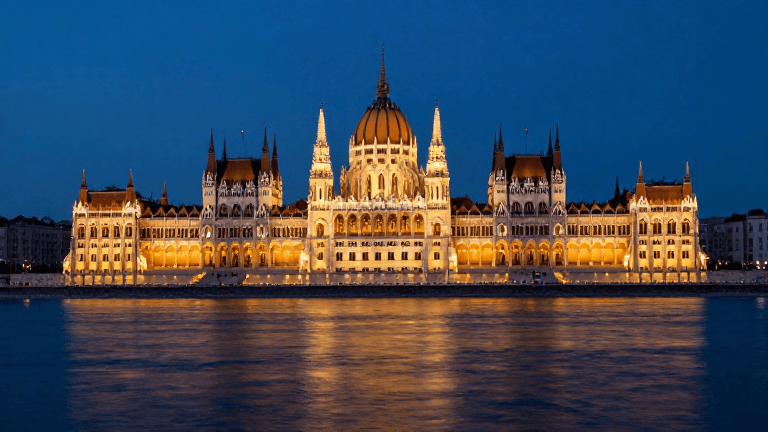
Everyone, I’m currently on a flight from Nepal to Chengdu, and just as I was boarding, I saw a news report: There’s been a major upheaval in Hungary. This isn’t just an ordinary change of government—it’s a complete regime change. Hungarian Prime Minister Orbán, the leader of the Fidesz party who has been in office for 16 years, suffered a major setback in the parliamentary elections on the 12th: out of a total of 199 seats, his coalition won only 55—a loss of 80 seats compared to the previous term. Meanwhile, the third-largest party, led by Magyar, secured a supermajority of 138 seats in one fell swoop, meaning they can amend the constitution and completely reshape Hungary’s political landscape. Orbán’s pro-China policies, including his “Look East” strategy, will face unprecedented challenges.
The key reason Hungary has become a hotspot for Chinese corporate investment in Europe lies in Orbán’s pro-China policies. He has offered Chinese companies a series of preferential policies, including tax subsidies, land incentives, and security guarantees. These policies have made Hungary one of the primary destinations for Chinese investment in Europe. New energy industry clusters and major projects—such as BYD’s Szeged plant, its first in Europe, and CATL’s 7.3 billion euro Debrecen plant—are prime examples. A Chinese new energy vehicle supply chain cluster, valued at least $18 billion, is entering the European Union via Hungary. In addition, Hungary is hosting the Hungary-Serbia Railway—the flagship European project of the “Belt and Road” initiative—as well as related logistics parks. More than 80 Chinese companies operate within Hungary, creating 15,000 jobs. Will all of this be threatened by a change in government?
The newly elected third-largest party is a pro-Western establishment party that supports the EU and NATO. The new government’s top priority is to repair relations with the EU and bring Hungary back into the “mainstream.” This not only means unfreezing the 17.1 billion euros in funds currently frozen by the EU but also implementing policies focused on transparency, the rule of law, and anti-corruption. This implies that many of the subsidies previously provided to Chinese companies may no longer exist, and past projects may face retrospective reviews. However, this does not mean that existing cooperation will encounter major difficulties. The cost of overturning agreements is too high, and the economic consequences would be unbearable. Strong economic inertia will compel the government to maintain economic stability. Nevertheless, future cooperation will undoubtedly be more cautious. There will be a greater emphasis on implementing the EU’s legal framework and competition rules. Therefore, it may become inevitable for us to strengthen diplomatic communication and work to mitigate the slowdown in new investments. To avoid being caught off guard, companies must not only be prepared to use legal means to protect their rights, conduct compliance audits, and proactively disclose information, but also explore establishing backup operations in neighboring countries—such as Serbia or Slovakia—to form supply chain ties with German automakers.
Orbán’s ouster also has significant implications for global politics. Known as a right-wing populist leader, he was once an enemy of the Western establishment. His downfall signals the decline of right-wing populism. Aside from the United States and Russia, figures such as Le Pen in France, Meloni in Italy, and Netanyahu in Israel all belong to this camp. Orbán was once viewed by the United States as an “ally” of right-wing populism. However, even these supporters were unable to save him, as there is a vast disconnect between the promises of right-wing populism and their actual delivery. Although Orbán is anti-globalization, he has attracted massive Chinese investment; although he proclaims that Hungary’s principle is sovereignty above all, he has repeatedly vetoed European aid to Ukraine; although he opposes immigration, he has quietly accepted large numbers of immigrants; and although he encourages childbirth, he has been powerless to stem the decline in the birth rate. These are all manifestations of his inability to reverse the trends of industrialization and globalization. Even if an establishment government were to take power, it would be difficult to sever supply chains deeply embedded with China based on ideological stances, and even more difficult to maintain public support in the long term.
Political changes in Hungary present both opportunities and challenges for us. Therefore, we need to appropriately strengthen our sustainable development model to ensure greater stability as Chinese enterprises expand overseas.