A New County in the Western Regions: The Taliban’s Economic Dreams and Practical Challenges
9/24/2026#新疆#瓦罕走廊#阿富汗#一带一路
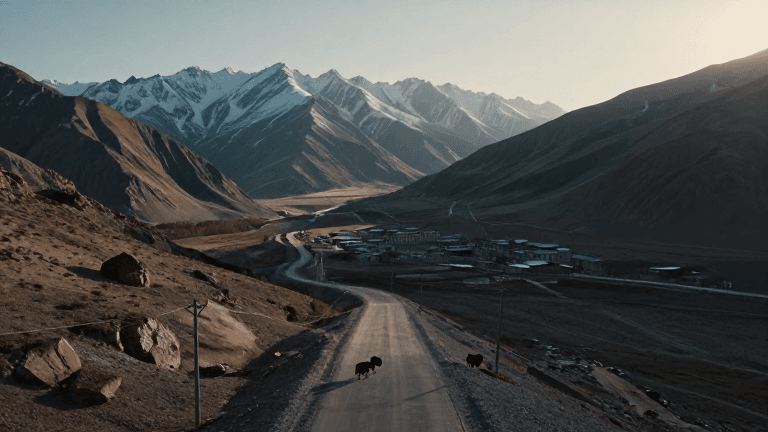
Folks, let’s talk about Cening County in the Kashgar Prefecture of Xinjiang. Friends here in China have given it the poetic nickname “Censhen,” and some even associate it with the golden age of the Tang Dynasty. But don’t be fooled by how artsy these names sound—foreign think tanks aren’t taking such a refined view. What they’re really concerned about is whether China—this “airplane taking off”—is going to carry the “virgin territory” of Kashgar up into the sky as well. In particular, are those Taliban in Afghanistan about to “get rich”? What exactly does our county’s name have to do with the Taliban?
Take a look at the map: the Taliban regained power in 2021. Afghanistan has a long, narrow “tentacle” extending into our Kashgar Prefecture’s Taxkorgan County. To the east of Taxkorgan County lies the newly established Cenin County. The creation of Cenin County was by no means a simple, one-size-fits-all decision. In the Hotan Prefecture to the east, two new border counties—He’an County and He’kang County—were also established in 2024. This is clearly a series of administrative consolidation measures, signifying that our country is strengthening its control over border regions. Why is this being done? Because of the “Belt and Road” initiative. Central Asia and Xinjiang—this broader region known as the Western Regions—are no longer merely a buffer zone for great power rivalry, but have become a hub for trade and cooperation. As a hub connecting Central Asia, South Asia, and West Asia, Afghanistan’s potential should not be underestimated.
Afghanistan’s mineral resources are staggering—natural gas, coal, iron, copper, chromium, lithium, and rare earth elements are all found there. Copper deposits, in particular, would make it the world’s third-largest copper belt once developed. Here in Xinjiang, we are so close to these mineral resources that failing to make full use of them would be a massive strategic oversight for both of us.
The Taliban also knows that to get rich, you must first build roads. For many years, they have repeatedly proposed the construction of the Wakhan Highway. This project was first proposed as early as 2008, but at that time, the goal was to combat the Taliban. At the request of the United States, President Karzai asked China to open the Wakhan Corridor to allow the delivery of supplies to counterterrorism forces. Although China agreed and conducted a feasibility study, no substantial progress was made. In 2021, after the Taliban drove out the Americans, they designated the Wakhan Highway as one of the country’s key national projects. Once completed, it will bring enormous economic benefits to Afghanistan. However, the 50-kilometer “Little Pamir Highway” they have built is still a dirt road, and whether it can be opened to traffic depends on China’s approval.
Although this highway holds immense potential, it faces numerous challenges. The technical difficulties of road construction in high-altitude regions are self-evident. However, China’s primary concern is security. The East Turkestan separatists and ISIS-K may launch attacks, and opium trafficking is also a major problem. These security issues require implementation at the grassroots governance level, as well as the establishment of a coordination mechanism among China, Afghanistan, Pakistan, and the Taliban to jointly combat crime. Underlying all this is the principle that security is the foundation and prerequisite for development.
The Afghan Taliban must also demonstrate the ability to counter armed criminals for the Wakhan Highway to be viable. Currently, Afghanistan serves merely as an extension of the China-Pakistan Economic Corridor, which enters Afghanistan from Peshawar and Quetta in Pakistan. The Taliban are very eager to cooperate directly with China, preferably without Pakistan acting as an intermediary. This is because only China can help Afghanistan “take off.” Meanwhile, relations with Pakistan are deteriorating due to the presence of the Pakistani Taliban (TTP). Resolving this issue will test the Taliban’s political acumen.
At present, the Taliban still demonstrate a certain level of capability. They have undertaken a series of infrastructure projects, ranging from canals to hydropower, gas pipelines, and even the development of a new city in the capital, Kabul. In addition to their capacity for long-term domestic planning and operational execution, they have also demonstrated the ability to coordinate on the international stage. Moreover, compared to the U.S.-backed government, they have been far more aggressive in their anti-corruption efforts. In short, Afghanistan needs industrialization and infrastructure development; it needs a stable environment; and it needs Chinese investment.
Therefore, Cengling County and the Wakhan Corridor actually reflect how security governance and connectivity interact with one another. The rise of Eurasian land-based trade has occurred precisely against the backdrop of the Iran conflict, which has laid bare the vulnerability of maritime shipping lanes. Ladies and gentlemen, this is not a Renaissance; it is a very real economic and security struggle.