The United States wants to cross the river by feeling Japan's stones, but rare earth weapons have side effects.
11/1/2026#稀土#供应链#中美博弈#产业观察
Everyone, in order to escape the rare earth chokehold, the United States is preparing to cross the river by feeling Japan's stones. Because Japan is the only country with complete survival experience in the face of rare earth weapons. I studied the relevant materials and found that China's rare earth moat is not the king bomb that some people imagine—throw it out and you're invincible. We need to be clear-eyed about this.
Let's go back to September 2010. A Chinese fishing boat collided with a Japanese patrol vessel near the Diaoyu Islands. Japan detained the Chinese captain, so China imposed an unofficial but de facto rare earth embargo that lasted two months. At first Japan didn't take it seriously, until officials responsible for the auto industry discovered that a rare earth supply cutoff would bring the entire auto supply chain to a halt. The magnets in motors cannot do without rare earths, and the supply of these key materials depended entirely on China. What's more terrifying: looking around the world, all industrial countries depended on China.
So Japan's Ministry of Economy, Trade and Industry allocated a 100 billion yen (about 8 billion RMB) emergency budget package specifically to support Japanese companies in broadening rare earth sources. The government agency JOGMEC, the Japan Oil, Gas and Metals National Corporation, formed a corporate partnership with Sojitz Corporation—the government put up the money, and Sojitz handled the commercial execution—to find rare earth sources outside China. It happened to be Australian mining company Lynas, which was then facing financial difficulties and wanted to build the world's first China-free rare earth supply chain: mining in Australia, refining in Malaysia. But it couldn't raise the money, and had no way to increase refining capacity in Malaysia. The Japanese came bearing money, and the two sides hit it off immediately.
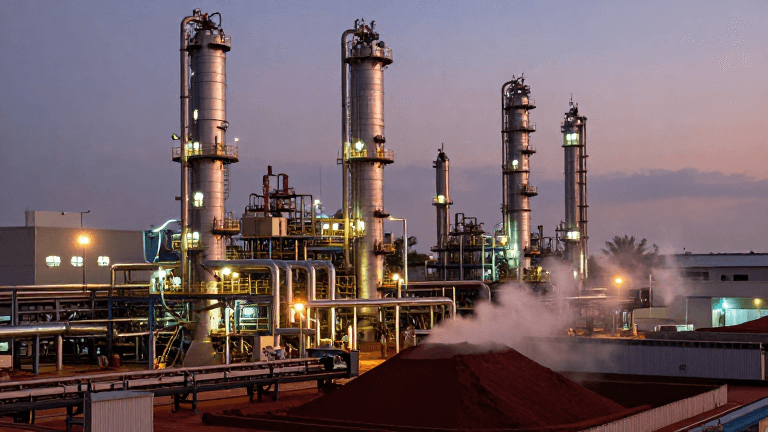
So Lynas spent $230 million to build a rare earth refinery on 100 hectares in the northern suburbs of Kuantan, Malaysia. This is one of the few large-scale rare earth separation facilities outside China. Malaysia has good relations with us, but it was very eager for Lynas to invest and build the plant. The reason is simple: uncertainty in rare earth supply drives up prices, and higher prices mean higher revenue for Lynas. At the time, annual exports were projected at $1.7 billion, exceeding 1% of Malaysia's GDP. Malaysia was overjoyed, and even offered a tax exemption period of up to 12 years.
After the plant was successfully built, miners in Western Australia went to mine in the desert 1,000 kilometers away from Perth, then shipped the ore by land and sea to Malaysia. There it was refined in Kuantan into high-purity single rare earth oxides, then shipped from Malaysia to Japan, where Sojitz distributed it to all Japanese magnet manufacturers, and then Japanese automakers purchased it for use in various products.
In 2010, when Japan's rare earth supply was cut off, it depended on China for over 90% of imports. That proportion has now dropped to around 60%. The Lynas plant in Kuantan is the largest non-Chinese source. Japan also imports some from Australia, Vietnam, the United States, and Myanmar, and does domestic recycling, which together account for about 10% of total supply. Precisely because Japan reduced its dependence on Chinese rare earths, it has recently been talking so tough—because it feels its back is stiff and it has the ability to cope with political risk.
Then why does it still buy 60% from China? The biggest reason is that Chinese rare earths are cheap—5 to 7 times cheaper than the refining cost of non-Chinese rare earths. Why so cheap? Lax regulation is undeniably one reason, but not the main one. We introduced refining technology from abroad and continuously iterated and optimized it through massive practice, forming a lot of tacit knowledge—for example, how to improve the recycling rate of waste residue, which contributes significantly to cost reduction. In addition, there's the patent pool plus industry standards: domestic manufacturers can copy the optimal process with one click by paying patent fees, while foreign companies have to figure out every step from scratch. Therefore, in the international rare earth market, Chinese rare earths command one price and foreign rare earths another—a very stark difference. A China-free supply chain can't make money unless it sells at a premium, so in the short term there's no hope of competing with China on price. So in fully market-based competition, most of these companies would die. But since geopolitical risk has been introduced, the environment for these manufacturers has actually improved, because the United States wants to nurture these little seedlings—first with subsidies, and second, key sectors like defense are willing to accept high prices. And they're also leveraging their strength in telling a good American story: a bunch of metals have been given value—Chinese rare earths are theirs, produced by polluting the planet, and cheap goods are no good; our rare earths are our own, safer, greener, more autonomous and controllable, more technologically sophisticated—so what if they're a bit more expensive?
Now the United States is setting out to build a domestic supply chain, including supporting rare earth mining in California, processing and magnet manufacturing in North Carolina and Texas, and leading multiple international cooperations with Europe, Australia, Japan, and others to reduce dependence on China. Japan feels its opportunity has come—in the past it was basically fighting alone, with no hope of completely escaping dependence; now everyone is joining forces to solve the problem. The next step, it will certainly want to export Japanese experience, from mines to magnets. It's expected that the US circle of friends will include a group of countries with resources and infrastructure, and Japan's experience will be very important—this kind of cooperation is crucial for reducing costs.
Telling this story is really to say that using rare earths as a weapon has side effects. Even if you try to strike precisely—for example, targeting military-industrial enterprises to avoid indiscriminate damage—a global premium will still prompt more countries, even those without security anxieties, Global South countries, to seek supply chain autonomy to avoid being caught between China and the US. The International Energy Agency predicts that by 2030, due to increased demand from electric vehicles, wind power, and defense, rare earth processing capacity outside China will grow from 15% to 30-40%. This is not a trend we can stop.
So our policymakers and rare earth practitioners need to consider how to convert lost market share into greater profit margins and stronger strategic autonomy.