"Bird" Stories in Scientific Papers
9/20/2026#光伏产业#生态环保#新能源#舆论争议
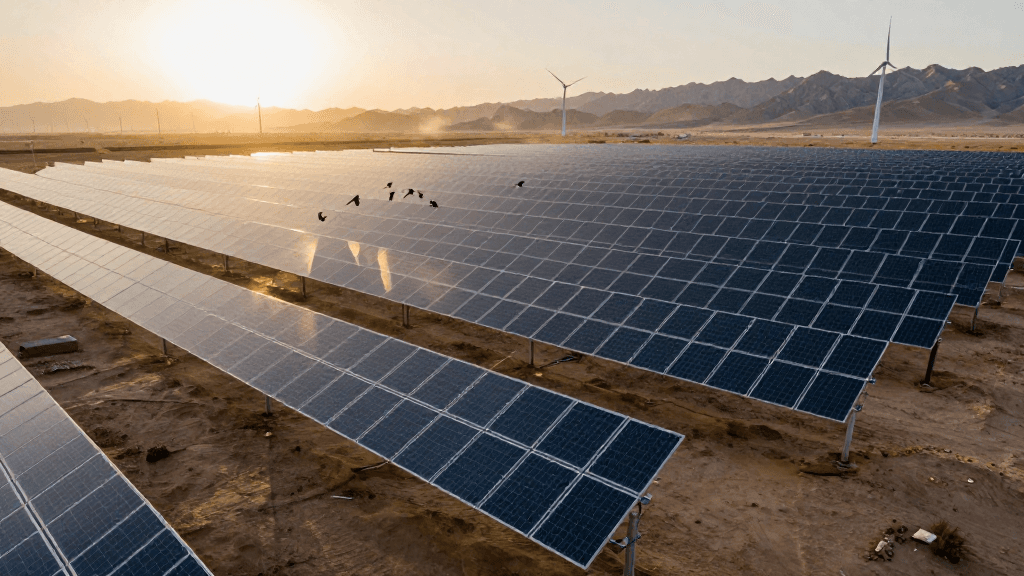
Ladies and gentlemen, in recent days, Chinese scholars published a study in *Science* on the impact of photovoltaic expansion policies on bird diversity, and the findings have sparked intense controversy. Some have criticized the study, claiming it provides ammunition for foreign critics to attack China’s photovoltaic industry; however, in my view, we should focus on the paper itself and examine its actual value.
This paper is indeed groundbreaking. It examines the relationship between photovoltaics and ecology on a national scale, with the core conclusion being that for every one standard deviation increase in the intensity of photovoltaic policies, the local Shannon diversity index for birds decreases by 2.1%. However, this very pioneering nature has also compromised the paper’s rigor. Let’s take a look at its line of reasoning.
First, the researchers collected photovoltaic industry policy documents from governments at all levels across the country. Based on their administrative enforceability scores, they constructed a county-level Policy Stringency Index (PSI). Then, using data collected by birdwatchers—also at the county level—they quantified bird diversity using the Shannon index. Through regression analysis, they found a correlation between an increase in the PSI and a decrease in the Shannon index. This impact was primarily concentrated in economically developed regions, rather than in the “Three North” regions where PV deployment is densest.
However, there are some issues underlying this conclusion. First, the PV industry and related policies have undergone constant changes over the past decade. Between 2021 and 2023, PV site selection shifted toward the Greater Northwest, and environmental regulations have also tightened. The researchers did not specifically analyze which policies impacted the ecosystem; instead, they broadly attributed the blame to “policies,” a conclusion that is overly simplistic.
Second, the choice of the Shannon index is flawed. It has two dimensions: species richness and evenness. For example, if a location originally had five rare bird species—20 of each—and they all became extinct, only to be uniformly replaced by five common bird species, the Shannon index would show no change. However, if one dominant species occupies the ecological niche, causing the populations of the other four to decline, the Shannon index would decrease. This index cannot clearly indicate whether the number of bird species has decreased or whether a particular species has become more concentrated. Therefore, these findings should be reported separately.
Furthermore, the paper chose to use birds to assess biodiversity. While there are many birdwatchers in the West and a wealth of accumulated data, the data from China’s Bird Watching Records Center is relatively limited. The distribution of observational data is uneven, with first-tier and new first-tier cities accounting for the top ten locations. Factors such as economic levels and transportation accessibility influence data distribution, yet these have no direct relationship with the level of avian diversity.
Additionally, the impact of fixed effects on the model’s explanatory power poses a problem. The researchers did not effectively control for confounding factors such as time and location. Although including fixed effects improved the model’s coefficient of determination (R²), this does not indicate the strength of the explanatory power of the photovoltaic policy itself. To eliminate the inflated effect of fixed effects, the model should examine the within R².
Finally, the researchers were unable to determine whether ecological degradation in a given location was caused by the photovoltaic industry or other human activities. Take the example of Zhejiang: while photovoltaic policies there were robust, the Shannon index declined and the number of birdwatchers surged—how can one be certain that photovoltaics were the cause?
Although the paper’s logical chain is not flawless, it introduces a valuable concept—“substandard greening”: from a satellite perspective, photovoltaic sites appear green and ecologically healthy, but in reality, they are often planted with a single, fast-growing grass species, and the complex ecosystem has actually been destroyed. Therefore, the recommendation that photovoltaic development must more strictly protect biodiversity is quite reasonable.
In summary, although this paper has some shortcomings, it raises important research questions. It has sparked a broad public debate, drawing attention to the ecological impacts of the energy transition. Even though the research sample is large enough to be somewhat general, the fact that it has stimulated rational discussion is a positive outcome. I hope that in the future, more ordinary people will participate in this kind of public academic discussion, making the production of knowledge more democratic. Don’t be intimidated by titles; present facts and reason logically—that is the attitude we should adopt in the internet age.