Seeing Through the "Multipolarity" Gimmick: The U.S. and China Remain in a Bipolar World
9/19/2026#中美关系#地缘政治#两极格局#外交事务
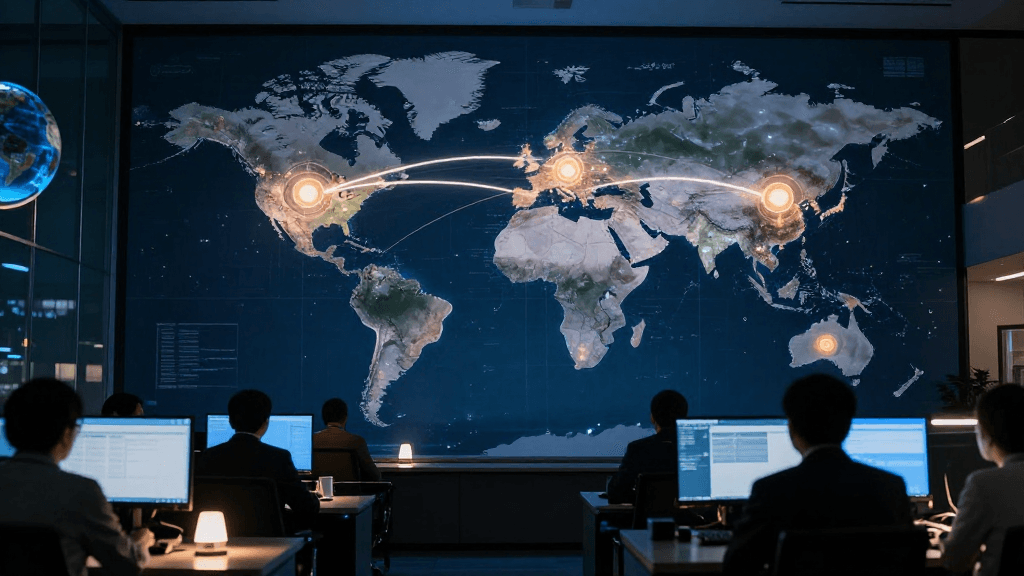
Everyone, let’s talk today about a recent article in *Foreign Affairs*. The author, Jennifer Lind from the Royal Institute of International Affairs, what did she say? Let’s break it down first.
### The Illusion of Multipolarity
The article argues that the world isn’t as multipolar as people think—it’s still dominated by the two superpowers, the United States and China. Doesn’t that sound a bit familiar? After all, during the Cold War, the U.S. and the Soviet Union were also the two superpowers. However, the author argues that while competition between the U.S. and China is intense today—and each has its own allies helping to carve out spheres of influence—this situation is more stable than a multipolar order, since a multi-power scenario would inevitably descend into chaos.
### The Threshold for Great Power Status
She then goes on to explain in detail the threshold for “great power” status, stating that a country qualifies if its GDP exceeds that of the top power by 17%–45%, or if its composite measure of economic scale and wealth (GDP multiplied by per capita GDP) reaches 8%–28% of the top power’s level. By these standards, both China’s GDP and its composite indicators far exceed the historical levels typical of great powers. In other words, China isn’t seeking hegemony; it simply doesn’t want to be ignored.
### The U.S. “Defensive” Strategy
So the question arises: what is the United States doing? The U.S. is “defending its stronghold”—that is, protecting its interests in Latin America from erosion. Recently, the U.S. released a National Security Strategy that explicitly emphasizes a focus on the Western Hemisphere, involving interference in Brazil, aid to Argentina, and taking a hard line against Venezuela and Panama. Isn’t this precisely a response to China’s growing influence in its “backyard”?
### China’s “Monroe Doctrine”?
Of course, China might also pursue its own version of the Monroe Doctrine—that is, establishing its own sphere of influence in East Asia, forcing neighboring countries to decouple from the U.S., and even attempting to drive the U.S. out of East Asia. This naturally brings to mind the tricks of imperialism.
### Concerns About a Two-Superpower Rivalry
The author expresses regret and concern over this. She believes that without a peace fully dominated by the United States—the so-called Pax Americana—the world will revert to the tensions of the Cold War era. German Chancellor Mertz recently made similar remarks.
### The World After the Unipolar Era
So, what will the world look like after the unipolar era? Their perspective has reverted to the pre-Cold War era. Will China become that kind of superpower? Will medium-sized and even small countries completely lose their agency? These questions remain to be seen.
### Uncertainty in the World Order
Currently, the international order is highly unstable. Take India, for example: it has once again begun talking about “Chicken Hill”—a truly deep-seated obsession. A report by Australia’s Lowy Institute is also optimistic about India, but it gave the country a score of only 40, placing it in the same category as Singapore, North Korea, and Brunei. It is still too early to say exactly what kind of multipolar world this will become.
In short, this *Foreign Affairs* article reminds us that the world may not be as complex as we imagine. The United States and China still dominate the bipolar landscape, but competition and geopolitical tensions will not disappear as a result.