Tea and Coffee: A Contest Between an Instant Kick and a Lasting Effect
9/25/2026#茶文化#中西交流#人文观察#世界和平
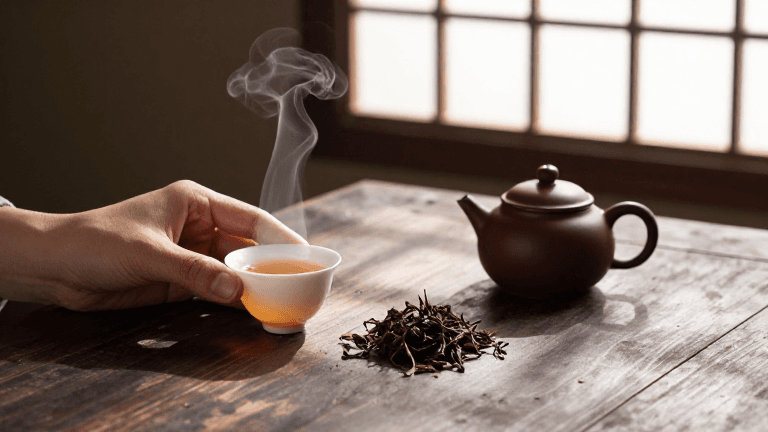
Everyone, coffee and tea—what exactly is the difference between these two beverages in our daily lives? Let me share my thoughts. Coffee is like a 100-meter sprint—it’s trendy, fashionable, and even carries a touch of American culture. When you drink coffee, all you have to do is pull over, order, enjoy a quick meal, and wash it down with a cup of instant coffee. Tea, on the other hand, is more like an endurance sport—a cultural legacy spanning thousands of years and an integral part of Chinese culture. Tea gives us more opportunities to connect with others and discuss different cultures, rather than just focusing on a single product.
Let’s take a look at the history of tea. In 1788, the first British colonists arrived in Australia, and officials at the time mentioned tea in their records. And when the first Chinese merchants arrived in Australia, they were also drinking tea. Tea has a long history in China—from the tea trade during the Han and Tang dynasties, to the “pointed tea” culture of the Song dynasty, and on to the teahouse culture of the Ming and Qing dynasties—its place in Chinese culture is irreplaceable.
In the mid-to-late 19th century, the British obtained tea from China. Around the time of the First Opium War, a Scottish botanist named Robert Fortune was sent to China by the East India Company in 1850 with the mission of uprooting tea plants and bringing back the tea-making process. He brought tea back to India and Ceylon, marking the beginning of their industrialization of tea production. Soon, by 1880, the scale of the tea industry established by the British in their colonies had surpassed that of China itself—and this was even more true on the consumer side. They dismantled Chinese culture.
I was born in Australia and lived there until I was 27. My mother is 89 years old—bless her—and she drinks tea every day, one cup a day. Yet, despite having drunk tea her entire life, she has never seen what real tea leaves look like. I first tasted real tea leaves—not tea bags—when I was 10 years old, and the experience was completely different. Tea from tea bags is a far cry from real tea leaves, because the leaves inside the bags have been shredded into fine particles, losing their original aroma and flavor.
Drinking tea in the office has become a part of consumer culture. Australians often hold tea parties at the office, where everyone drinks tea and eats cookies together. But in modern society, this cultural tradition has been replaced by tea bags; people no longer need to brew tea themselves—they simply open a tea bag, add water, and enjoy it. Behind this convenience, however, lies a neglect of traditional tea culture.
I once traveled to Yunnan, China, specifically to visit Jingmai Mountain and see those ancient tea trees, which helped me understand the history of China and tea. I encourage everyone to visit China and see those ancient tea trees on Jingmai Mountain—the same species is grown in India, Sri Lanka, and even Australia, but there they are mostly pruned into waist-high shrubs, whereas here in Yunnan, China, they are naturally towering trees. Today, Jingmai Mountain has been designated a World Cultural Heritage site, and those ancient tea trees are between 300 and 500 years old. The Blang, Dai, and other ethnic groups were the first Chinese people to interact with these ancient tea trees, and that connection has never been severed.
My connection to the Ancient Tea-Horse Road dates back to 2008. That year, Beijing was hosting the Olympics, and I was conducting fieldwork in Yunnan, looking for a research topic. Someone mentioned the “Ancient Tea-Horse Road” to me, and I asked, “What is that? I’ve never heard of it.” A friend then introduced me to Professor Mu Jihong—it was he who first proposed this concept in 1990. The Ancient Tea-Horse Road was an ancient tea trade route connecting southwestern China with India, Nepal, and other regions. It not only facilitated the flow of goods but also promoted cultural exchange, influencing the lifestyles of neighboring ethnic groups.
Tea is not merely a beverage; it also embodies culture and history. During the Tang and Song dynasties, tea had already become one of the most popular beverages in China. The existence of the Ancient Tea-Horse Road further attests to tea’s significant status in Chinese culture. The rise and fall of the Ancient Tea-Horse Road reflect the socio-economic developments and changes in China and serve as a historical testament.
The charm of tea lies in its spiritual quality. In ancient times, people used tea to aid in meditation and spiritual practice, which is why tea possesses unique cultural value. Unlike coffee, tea does not make people feel overly tense or excited; rather, it allows them to find a moment of tranquility amid their busy lives. This may be why tea remains so beloved in modern society.
In short, tea and coffee each have their own merits. Tea represents a enduring cultural legacy, while coffee embodies a fast-paced, trendy culture. Although tea bags are convenient, they cannot replace the wonderful experience offered by real tea leaves. As a tea lover, I am eager to continue exploring the world of tea and sharing its charm.