From Follower to Leader: China's Pharmaceutical Innovation Is Gaining Strong Momentum
9/29/2026#生物医药#创新药#医药研发#风险投资
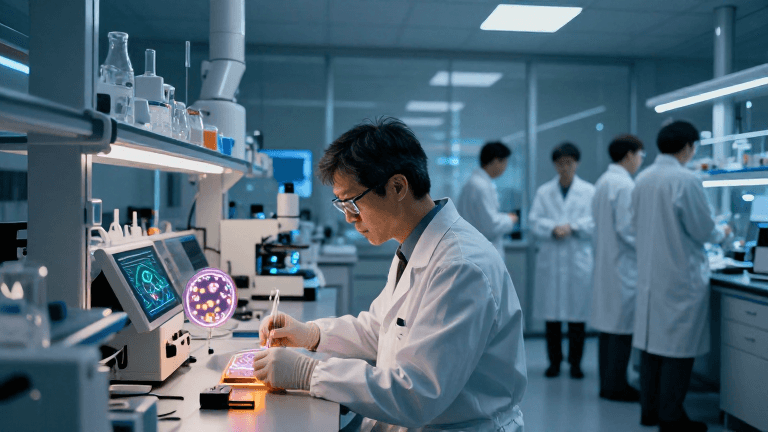
Everyone, recently I've heard that our Chinese pharmaceutical industry has transformed from an unknown capacity provider into a global innovation center. Over the past decade, we have not only rapidly followed from 1 to 99, but have truly begun to engage in original innovation from 0 to 1. Foreign pharmaceutical companies are now restless, flocking to our Chinese laboratories to find projects, fearing that others will seize the initiative.
Since the second half of last year, global pharmaceutical capital has become active, especially in January and February of this year, when Western big pharma completed a total of 41 deals in China. The valuation of Chinese companies has soared, with average upfront payments doubling from $38.8 million to $77.7 million, and total valuations reaching a record $52 billion. Investors have also shifted their focus to the early stages of biotechnology, rather than waiting for scientific research to become mature commercial assets.
Previously, our pharmaceutical industry mainly relied on support from the broader environment, including policy incentives, educational dividends, and labor cost advantages. But the most prominent was the huge patient base and hospital system, with clinical trial recruitment speeds 3 to 5 times faster than in the United States. Meanwhile, the efficiency of new drug R&D in the U.S. has been declining due to bureaucratization and high costs. Many big pharma companies have become project management and channel sales companies, increasingly outsourcing R&D. In the past, many American investors did not believe in our scientific research capabilities and thought clinical data might be fabricated. But last year, Boston's RA Capital sent a team to investigate and found that the clinical trial systems of the Chinese Academy of Medical Sciences and mainstream hospitals are very advanced, capable of conducting over 100 clinical trials simultaneously. Although there are differences in data generation methods, the possibility of data fabrication is low.
Therefore, this month RA Capital plans to collaborate with the Suzhou Biomedical Industrial Park for a roadshow, organizing one-on-one meetings with scientists from all over the country, providing support in funding, strategic planning, team building, overseas operations, and other aspects. In October, it will also hold a scientific seminar in Hangzhou to directly contact scientists. With the explosive growth of China's early-stage innovation pipelines, the traditional investment model is clearly too slow. Although clinical validation is efficient, the discovery stage is the source of high risk and high reward. Therefore, embedding upstream in laboratories is necessary to secure better terms, earlier exclusivity, and capture more returns.
More and more American venture capital firms are realizing that as China continues to increase investment in science, scientific research development has reached a turning point. They can no longer take it for granted that what the U.S. has not discovered, China cannot discover. New York-based venture capital firm Pacific Bridge stated that the quality of scientific research innovation in Chinese universities is continuously improving. More importantly, Chinese universities are mainly government-funded and less commercialized, so they have greater motivation for basic research and are more likely than American private institutions to produce new innovative technologies. This is actually taking advantage of the stage where China's scientific research commercialization mechanism is not yet mature and its premium capacity is asymmetric, arbitraging through valuation mismatches to acquire early-stage assets with significant potential.
Of course, Chinese local VCs have also awakened and often advise scientists not to rush to publish papers but to incubate internally first. If American VCs do not cooperate with local partners, enter laboratories, and fund scientists to start companies, they will not be able to grab pre-publication assets. The so-called arbitrage can only be achieved under conditions of insufficient competition. In recent years, local venture capital financing has contracted, and some laboratories and small and medium-sized biotech companies are financially strained, putting scientists in a relatively weak position. To quickly monetize, they accepted higher discounts and relatively conservative upfront terms, leading to undervalued IP. But soon, fierce competition among investors led to a re-recognition of the value of Chinese assets, and upfront payments rose significantly.
Behind this is actually the result of the accelerated development of the knowledge economy. China's pharmaceutical industry is transforming from contributing capacity to contributing knowledge. The U.S. used to often accuse China of stealing intellectual property and ideas, asserting that China can only produce, not innovate. But now the situation is that the global capacity for generating intellectual property has undergone a structural shift. China has become an early-stage innovation engine for biomedicine, while the U.S. division of labor has shifted toward later-stage commercialization. If China's capital and commercialization capabilities strengthen and continue to maintain the叠加 of policy and ecological advantages, with improved efficiency across the entire industry chain, it will inevitably occupy a larger space in the value chain.
The knowledge economy is people-oriented. Where talent is dense and supporting facilities are more complete, capacity will shift there. China has great advantages in these aspects, so next, our prominence in pharmaceutical innovation will only become more pronounced.