Behind the PISA Scores: The Hidden Truth About China's Education System
9/14/2026#教育#PISA#基础教育#城乡差距
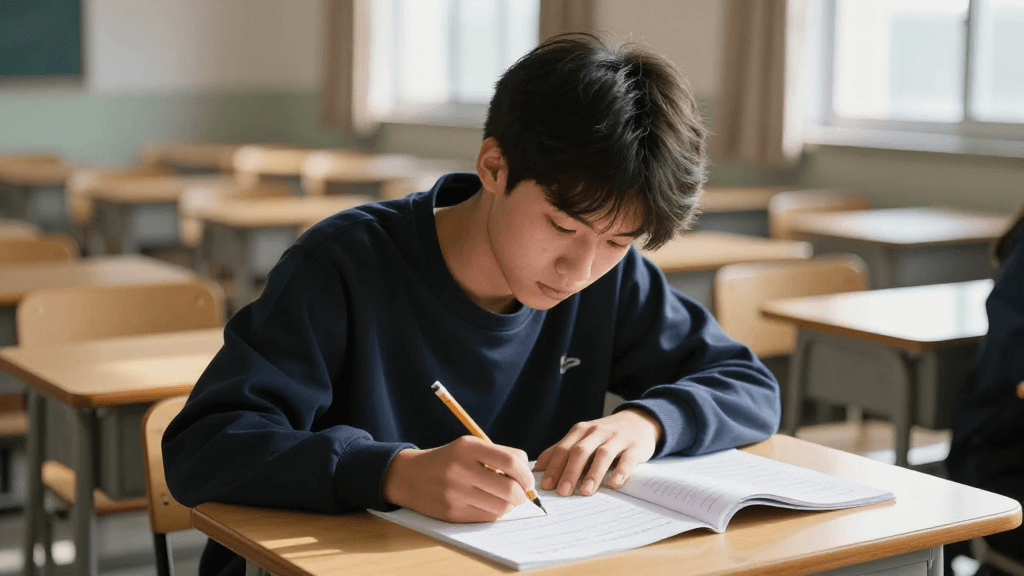
Everyone, today let’s talk about PISA scores. Chinese students always perform so impressively in this international assessment—but are these results really as impressive as they seem? The American Enterprise Institute isn’t one to mince words, and they’ve spoken a harsh truth: Don’t be fooled by these staggering scores—we need to take a closer look.
PISA is a test administered every three years by the OECD to assess the abilities of 15-year-olds—roughly middle school graduates—in math, science, and reading. Participation is determined by a random sample of schools and students from selected regions. There are no extra credits awarded after the test, and individuals receive no personal benefits, as its purpose is to evaluate the education systems of different countries. China began participating in 2009. Initially, only Shanghai represented the country; in 2015, Beijing, Jiangsu, and Guangdong were added; and in 2018, Guangdong was replaced by Zhejiang. In 2022, data collection was not completed due to the pandemic, so China did not release its scores, which is why Singapore was ranked first—though Singapore’s score was still lower than China’s in 2018. This skewed the results.
How did the results turn out? Based on the 2018 assessment, China’s total score across the three subjects—science, reading, and math—was 1,736 points, while Singapore, in second place, scored 1,669 points. From third place onward, no other country exceeded 1,600 points. No matter how you look at it, this score gap doesn’t seem like something ordinary students could achieve casually. What does this score gap mean? In the knowledge economy era, today’s student performance represents the competitiveness of the future workforce. If there is a 100-point difference in PISA average scores, it could lead to a 20% gap in productivity in 10 years and nearly a 60% gap in 20 years. This truly embodies the saying, “A strong youth means a strong nation.”
But are these results truly flawless? The American Enterprise Institute doesn’t see it that way. First, the most critical aspect of PISA is random sampling, yet China has never achieved true randomness in its participation—it has consistently selected students from the country’s most developed regions. This reflects only the educational standards of the participating regions, not the national average. In 2015, the students China sent came from four provinces and municipalities, covering 18.1% of the total population; in 2018, Guangdong—a populous province—was replaced by Zhejiang, which has a higher per capita income but a smaller total population, causing the population share of the four regions to drop further to 13.8%, making the sample even less representative. The author raises a more immediate point: the wealthier a region is, the more educational resources it has, and the better the students’ academic performance. By selecting students from China’s more developed regions to participate, the country effectively places them on a higher starting line.
There is some truth to this argument, but while there is a correlation between regional economic levels and student performance, it should not be taken as an absolute rule. For example, we’ve all taken the Huanggang practice exams, right? Hubei’s economy ranks in the upper-middle range nationally, yet its education system is among the very best. That said, China has a long tradition of valuing education, so student achievement cannot be predicted solely based on socioeconomic indicators. Ultimately, the PISA data remains unverifiable, which naturally raises doubts.
Second, he questions the authenticity of the test scores. From 2015 to 2018—a span of just three years—the average score of Chinese students rose by 65 points, which is equivalent to the score gap between the Netherlands and Mexico; the proportion of students performing poorly also dropped significantly: those scoring low on reading fell from 43% to 19% over three years, while those scoring low on math dropped from 38% to 9% and those on science from 38% to 10%. Such rapid and dramatic progress is unprecedented in the history of PISA, across all participating countries and all test administrations. So how does the author explain this meteoric rise? Cheating, as well as organized and targeted test-prep training.
It’s not as if cheating doesn’t happen—I know firsthand that for some private exams, if you pay a high price, you can get the exact questions in advance, down to the last one; all you have to do is memorize them. But China is certainly not the only country where cheating occurs; the author also acknowledges that cheating is very widespread in countries like India and Indonesia. As for test preparation, there are reports that students selected to participate in PISA are given high priority by local governments and the education system. Educational research departments analyze the test questions, and schools organize specialized training programs, including mock exams based on past test papers—which makes targeted preparation possible. In other words, although PISA has no direct impact on individual students’ college admissions, the government attaches great importance to it. Consequently, the selection process is not random; instead, every effort is made to help students improve their scores in order to showcase the nation’s image or educational strength.
Therefore, one cannot infer the accumulation of China’s knowledge capital based solely on PISA scores. He mentioned another international standardized test called PIRLS, or the Progress in International Reading Literacy Study, which primarily assesses reading comprehension. Stanford University once administered the PIRLS test to fourth-grade students in rural areas of Guizhou, Jiangxi, and Shaanxi provinces. The results placed them very low in international rankings—not only below Western countries but also below many developing nations. The relatively developed Shaanxi Province ranked slightly above Indonesia and on par with Colombia and Qatar; Jiangxi ranked below Morocco, and Guizhou ranked even lower than Jiangxi. At the time, the researchers also wrote a book titled *The Invisible China*, arguing that, outside the media spotlight, many Chinese people are actually overlooked.
So how can we conduct a comprehensive assessment? The World Bank database uses a metric called HLO (Harmonized Learning Outcomes), which integrates the results of three international standardized assessments—PISA, PIRLS, and TIMSS—and reconstructs a model of the average performance of Chinese students based on local socioeconomic data. The results showed that China’s HLO score was significantly lower than its PISA score, placing it far below Western countries, somewhere between Mexico and Turkey.
Furthermore, the World Bank introduced the concept of “learning poverty”: 10-year-old students or fourth-graders who lack basic reading skills are considered to be in a state of learning poverty. China participated in the compilation of this report, providing domestic data not reflected in PISA. According to our own data, in 2016, 18.2% of children in China were unable to read basic texts, compared to 2.8% in Singapore; yet in the 2018 PISA reading scores, China actually outperformed Singapore.
So while students in China’s urban areas do indeed perform well, what about rural areas? That’s hard to say for certain; we can only estimate that—with Vietnam as the upper limit and Cambodia as the lower limit—the percentage of students lacking basic skills ranges from 19% to 69%. That’s an incredibly wide range; after all that data collection, it’s almost as if nothing had been measured at all. If we were to force a median value, it would be on par with Turkey’s level.
PISA scores are not merely a baseline assessment; they serve a policy-oriented purpose: either to validate the correctness of current policies or to demonstrate the necessity of future reforms. And since today’s scores translate into tomorrow’s productivity, countries naturally have an incentive to showcase their competitiveness, shape their international image, attract talent and investment, and simultaneously enhance the global influence of their educational models. Therefore, we must see through the truth behind these scores.
Ladies and gentlemen, while PISA scores may be high, the reality of our education system is not nearly as rosy. I hope we can face these issues head-on and drive truly beneficial educational reforms.